
22 min read
Types of Fur Coats Compared: Mink, Fox, Sable, Rabbit and More
Types of fur coats compared: mink, fox, sable, rabbit, lamb, tanuki and more — warmth, weight, durability, price and what to check in vintage fur.
The type of fur decides most of what a coat will be like to own: how warm and heavy it feels, how well it stands up to wear, what it looks like, and roughly what it costs. Mink is short, dense and hard-wearing; fox is long-haired and full of volume; sable is soft and light and sits at the top of the price range; rabbit is light and affordable but has thin, fragile leather. This guide compares the main types side by side, explains trade names that hide a different animal ("Canadian sable" is marten, "Finn raccoon" is raccoon dog), and lists what to check before you buy a vintage fur.
We are TOKONAME FUR HOUSE, a curated vintage fur store in Tokoname, Aichi, Japan, and most of what follows draws on the coats that pass through our hands. Facts we have not seen ourselves come from published sources, which we name in the text.
Vintage fur types compared at a glance
In short: mink is the durable all-rounder, fox gives the most volume, sable is the soft, light top-end fur, and rabbit is the light, affordable option with the shortest life. The table puts the main types side by side. A dash means we have no reliable basis for a rating, so we leave the cell empty rather than guess.
How to read the columns. These ratings are our own rule of thumb from handling vintage coats, not laboratory measurements. Warmth: every fur here is warm; rabbit sits a step below the others. Weight is how the fur feels as a garment (a long, full coat of any type will still feel substantial). Durability and price band compare the types as we see them in our own shop. Where we have no basis, the cell shows a dash. A separate historical durability scale follows below.
| Fur | Warmth | Pelt weight | Durability | Price band | Hand-feel | Look |
|---|---|---|---|---|---|---|
| Mink | High | Mid | High | Low–mid | Short, thick, soft | Wide natural colour range, near-black to white |
| Fox | High | Mid | Mid | Mid | Long, soft, silky guard hairs | Full, voluminous |
| Sable | High | Mid | Mid | High | Smooth in every direction; silky | Light to dark brown, sometimes silver-tipped |
| Rabbit | Mid | Light | Low | Low | Thick, fine; rex rabbit plush and even | White to black; often dyed |
| Chinchilla | High | Light | Low | High | Extremely soft, velvety | Blue-grey with darker shading |
| Lamb / mouton | High | Mid | — | Low–mid | Curled (karakul), straight (mouton) or long and wavy (Tibet) | Ranges from flat curls to long wool |
| Raccoon | High | Mid | — | Low–mid | Long, grizzled top hair | Dark and silvery grey |
| Tanuki (raccoon dog) | High | Mid | — | Low | Long, coarse guard hairs over dense underfur | Caramel-brown with black tips |
| Nutria | High | Mid | Mid | Low–mid | Very soft when sheared | Usually sheared; often dyed |
| Beaver | High | Mid | — | Low | Plush, velvet-like when sheared | Bluish-brown underfur |
| Lynx | High | Mid | — | High | Long, silky, flowing | Pale grey to white, with spots |
| Marten | High | Mid | Mid | Mid–high | Mid-length, silky | Pale grey to dark brown |
| Squirrel | High | Light | — | Low–mid | Even, close | Blue-grey to reddish-brown |
| Ermine | High | Light | — | Mid–high | Short, even | White with black tail tips |
| Kolinsky (weasel) | High | Mid | — | Low | Short | Yellow to reddish; often dyed |
| Fitch | High | Mid | — | Mid–high | Fine, open top hair | Dark guard hairs over yellowish underfur |
A widely cited historical durability scale
Many fur guides quote a durability chart from a 1922 book by the fur-industry chemist William E. Austin, which rates dressed furs against otter at 100. It is a historical reference, not our rating, and it describes pelts tested a century ago rather than any particular vintage coat. It also shows that dyeing lowered the score: natural mink is rated 70, dyed mink 35.
| Fur (as named in 1922) | Durability (otter = 100) | Weight (oz per sq ft) |
|---|---|---|
| Otter | 100 | 4-1/2 |
| Beaver, natural | 90 | 4 |
| Beaver, plucked | 85 | 3-7/8 |
| Mink, natural | 70 | 3-1/4 |
| Raccoon, natural | 65 | 2-1/4 |
| Persian lamb | 65 | 3-1/4 |
| Marten, baum (pine), natural | 65 | 2-3/4 |
| Sable | 60 | 2-1/2 |
| Fox, natural | 40 | 3 |
| Mink, dyed | 35 | 3-1/4 |
| Ermine | 25 | 1-1/4 |
| Kolinsky | 25 | 3 |
| Lynx | 25 | 2-3/4 |
| Nutria, plucked | 25 | 3-1/4 |
| Squirrel, grey | 20–25 | 1-3/4 |
| Chinchilla | 15 | 1-1/2 |
| Rabbit | 5 | 2-1/4 |
Which fur should I choose?
Start from how you will wear the coat, then narrow down by type. These are starting points, not rules — the condition of a vintage piece matters as much as the species.
- For a cold climate: look for dense underfur rather than long hair, since density does more for insulation than length. Beaver and chinchilla have very dense fur, sheepskin is a recognised insulator, and raccoon dog winter fur is long with a dense underfur.
- If you want something lightweight: chinchilla, squirrel and ermine have the lightest pelts in the historical data; among everyday coats, rabbit is light.
- For everyday wear: mink is the safe choice — durable, with guard hairs that do not break readily and underfur that does not tend to mat. Shearling is also described as very durable.
- For formal occasions: fox gives volume and a glamorous look; sable has been a status fur for centuries.
- For a first coat: mink. It wears well, and its natural colours range from near-black to pale beige, so it is easy to find one that suits you.
- On a budget: rabbit, tanuki, beaver and kolinsky sit at the accessible end of our price range, with mink, lamb and mouton, raccoon, nutria and squirrel just above — but rabbit's leather is thin and tears easily, so check it carefully.
Mink fur
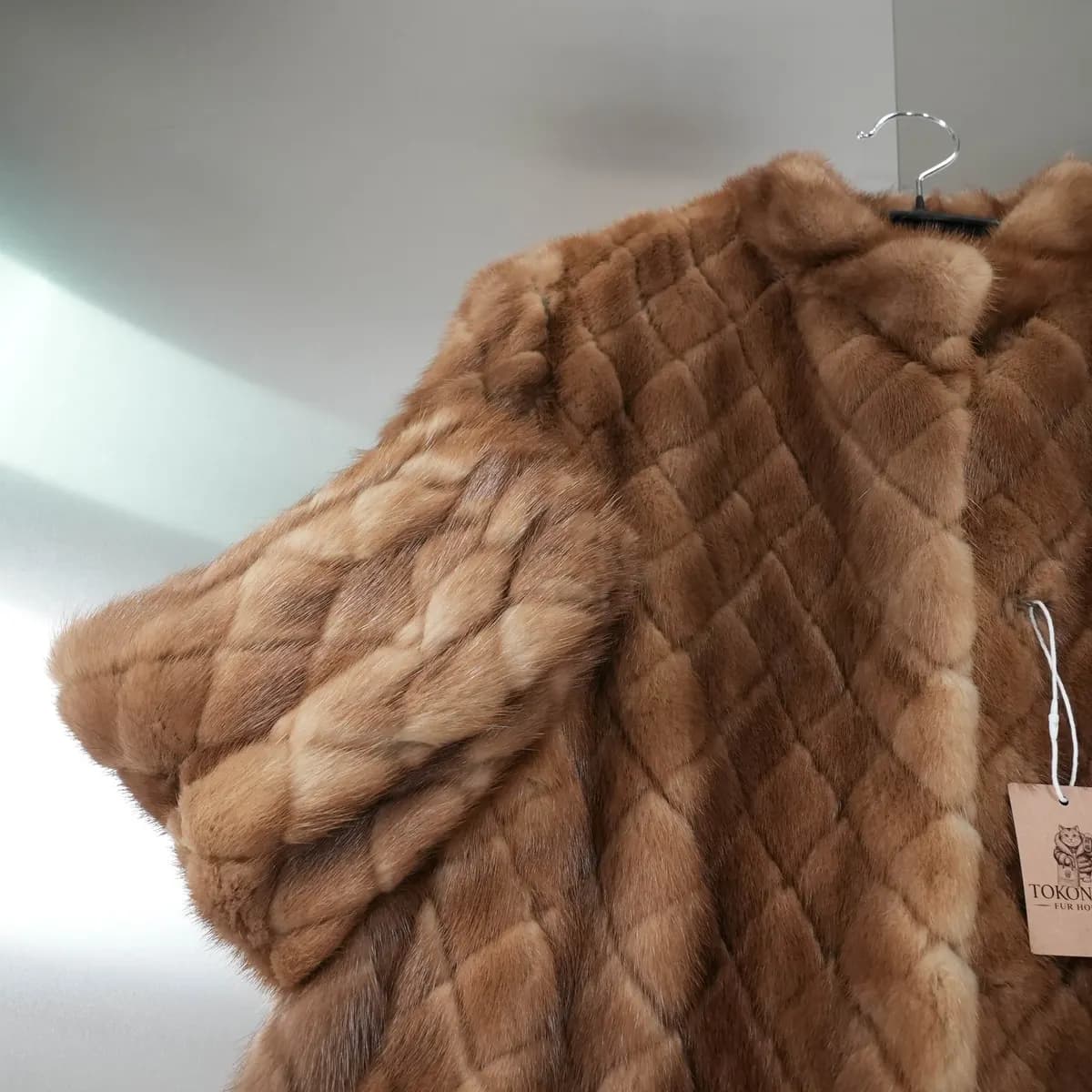
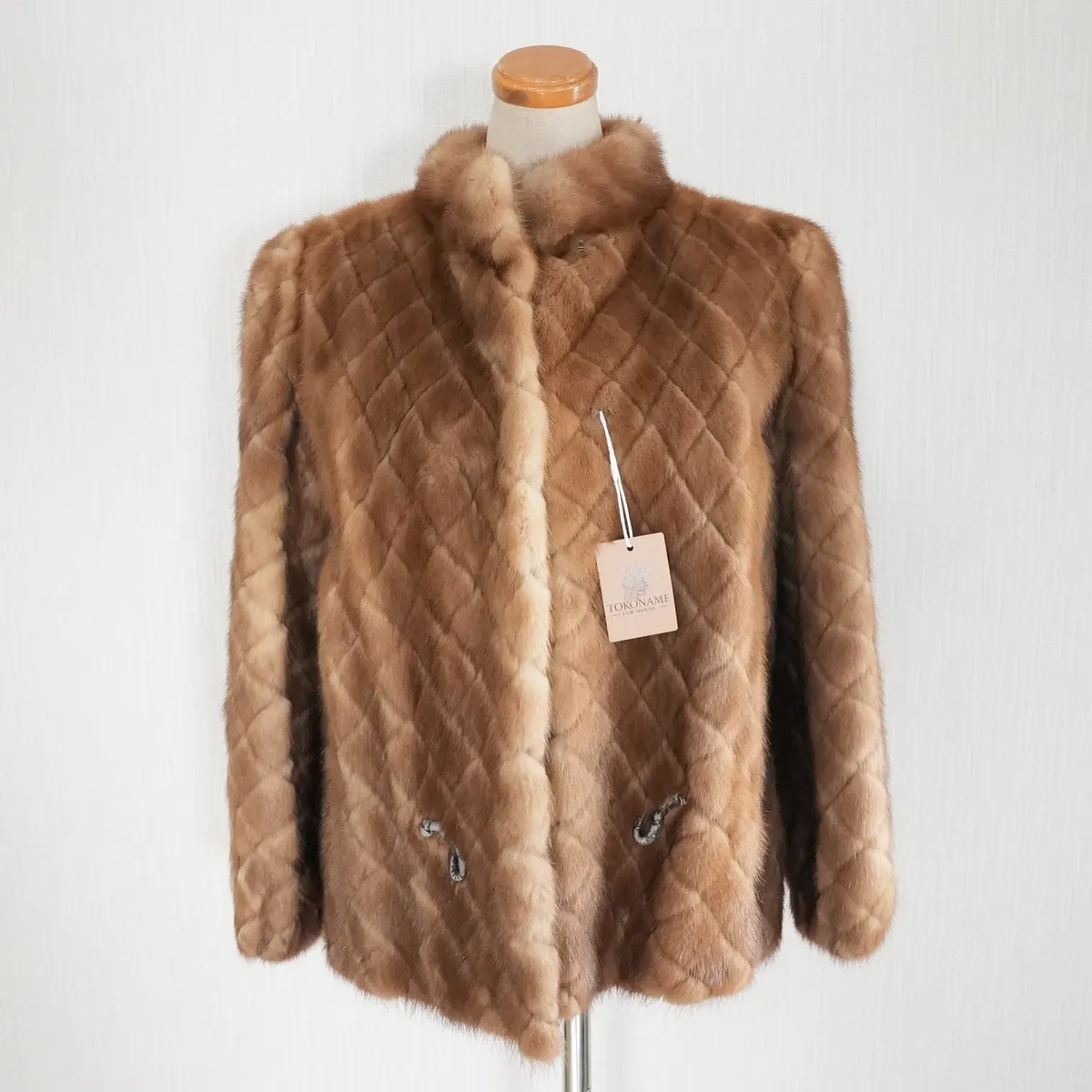
Mink is the durable all-rounder of the fur world: short, thick, soft hair with guard hairs that do not break readily, on leather that holds up well to regular wear. Even in natural colours alone it covers a wide range — dark ranch, mahogany, demi-buff, pastel, sapphire, pearl and white all pass through our shop — so people who own more than one can choose by mood. On the historical scale, natural mink scores 70 against otter's 100.
Points to know: sunlight gradually fades dark mink towards a warmer brown, so check colour evenness in daylight. Labels you will meet on vintage pieces include SAGA, Blackglama, American Legend and Kopenhagen.
Fox fur
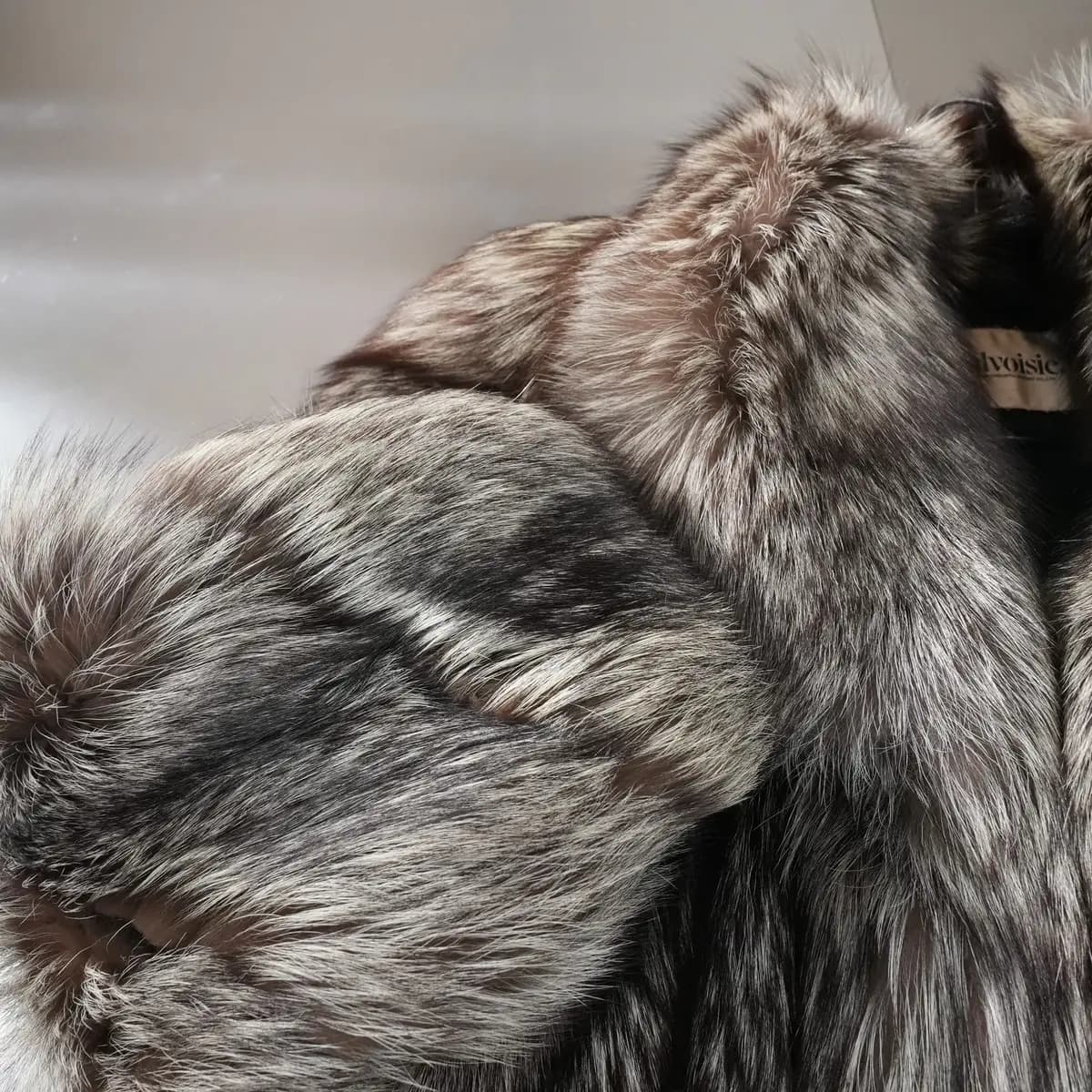
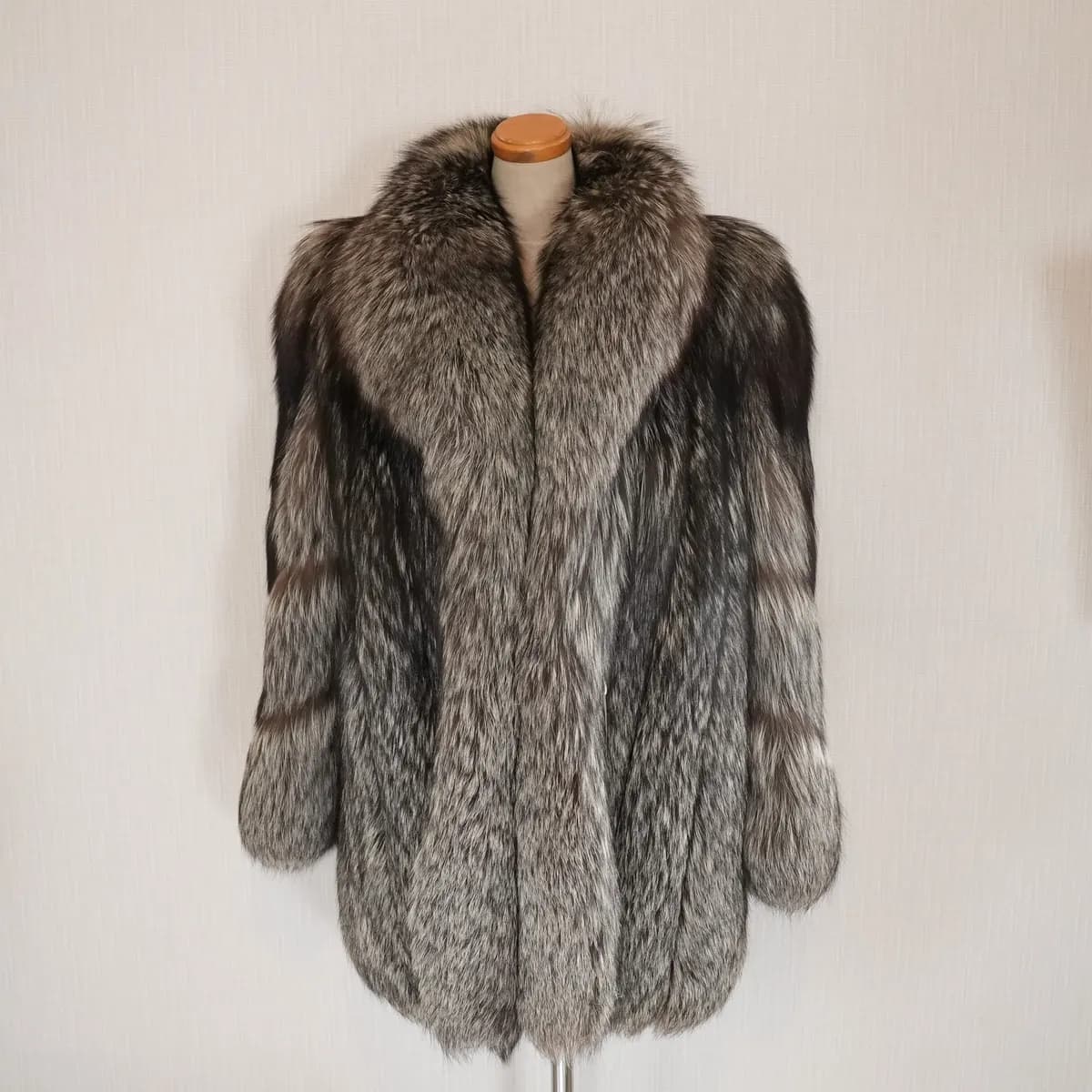
Fox is the fur to choose for volume and glamour: long guard hairs over a soft underfur give a full, dramatic silhouette. As a rule of thumb it is less durable than mink but much more durable than rabbit. Silver, red and cross fox are colour phases of the same species, the red fox; blue fox is the arctic fox.
Varieties we have carried include silver, blue, blue frost, shadow, red, golden island, platinum and cross fox, many of them with SAGA or EMBA labels.
Sable fur
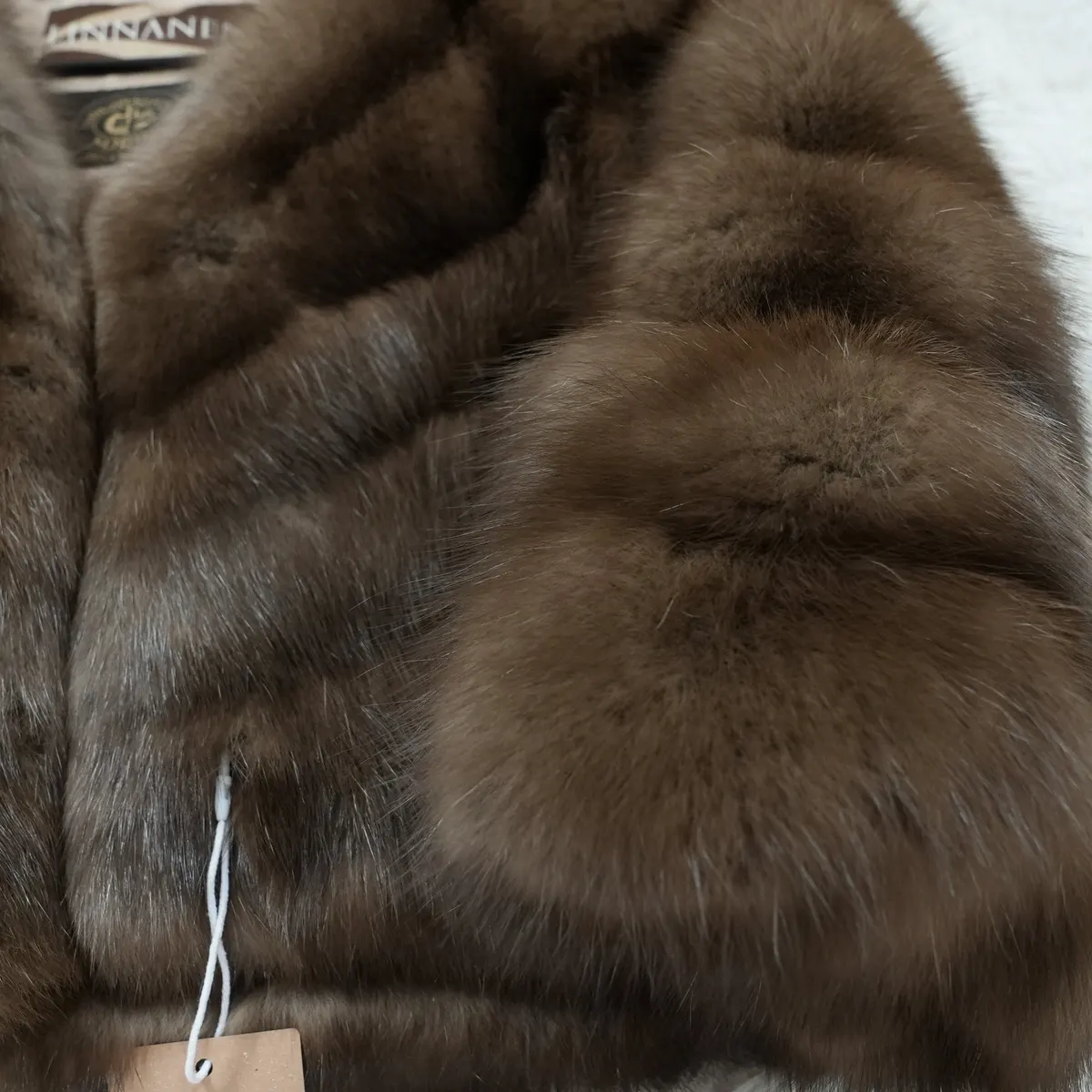
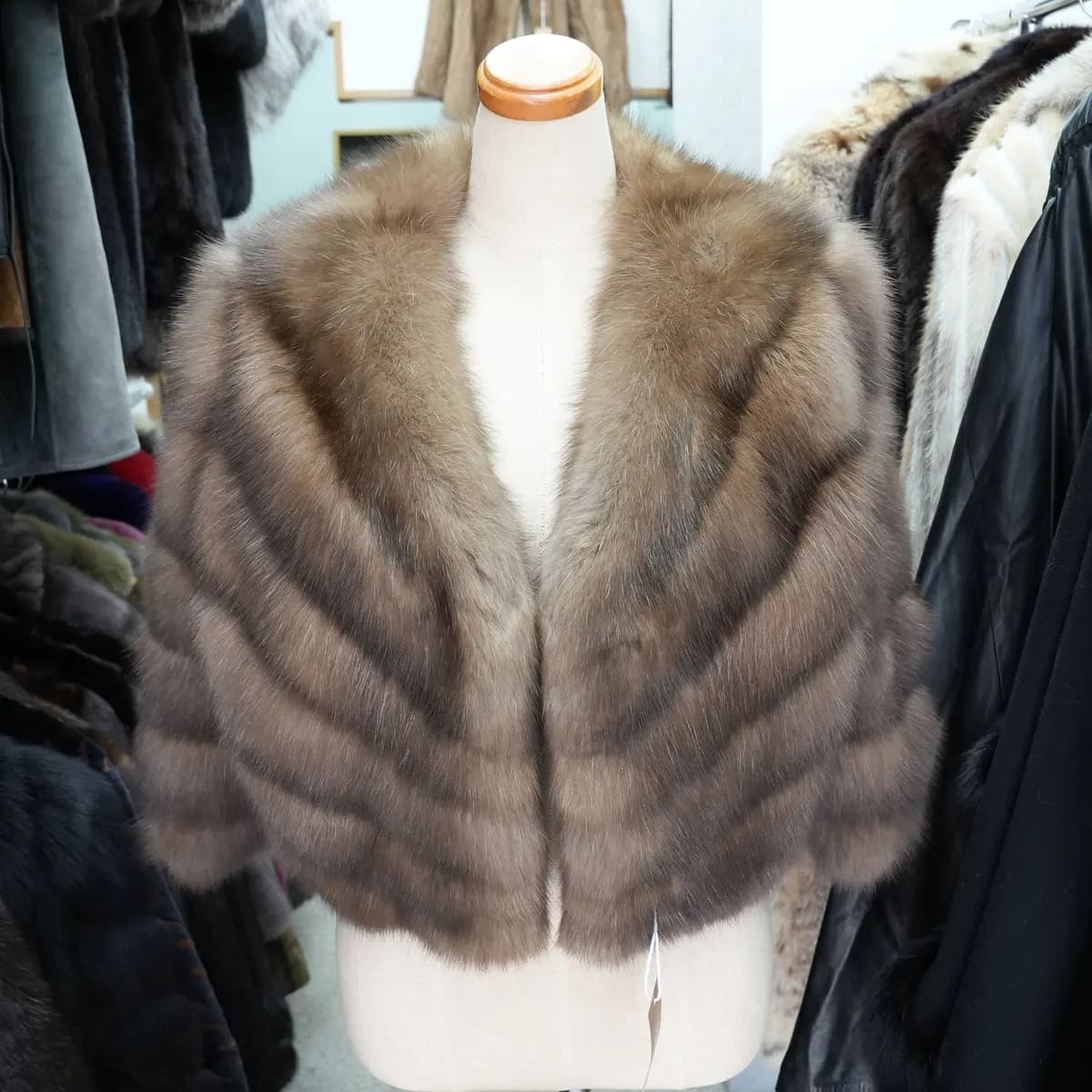
Sable (Martes zibellina) is a Russian and Siberian marten whose fur stays smooth in whichever direction you stroke it — softer and silkier than the American marten sold as "Canadian sable". The leather is light and fine, and sable sits at the top of our shop's price range. Colours run from light to dark brown; the Barguzin population is known for very dark fur with white-tipped hairs.
If a label says "Canadian sable" or "American sable", read the marten section below before you buy.
Rabbit fur coats
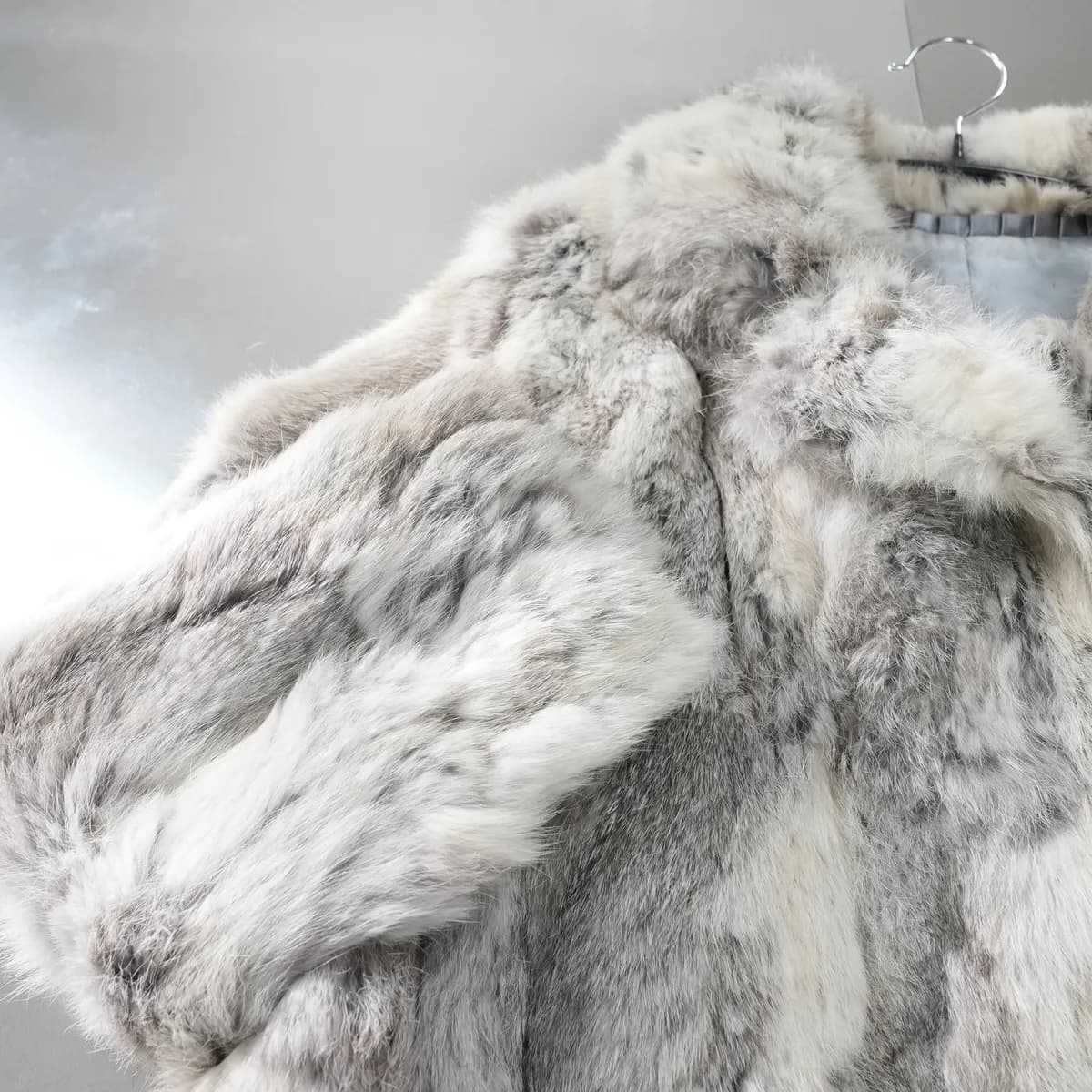
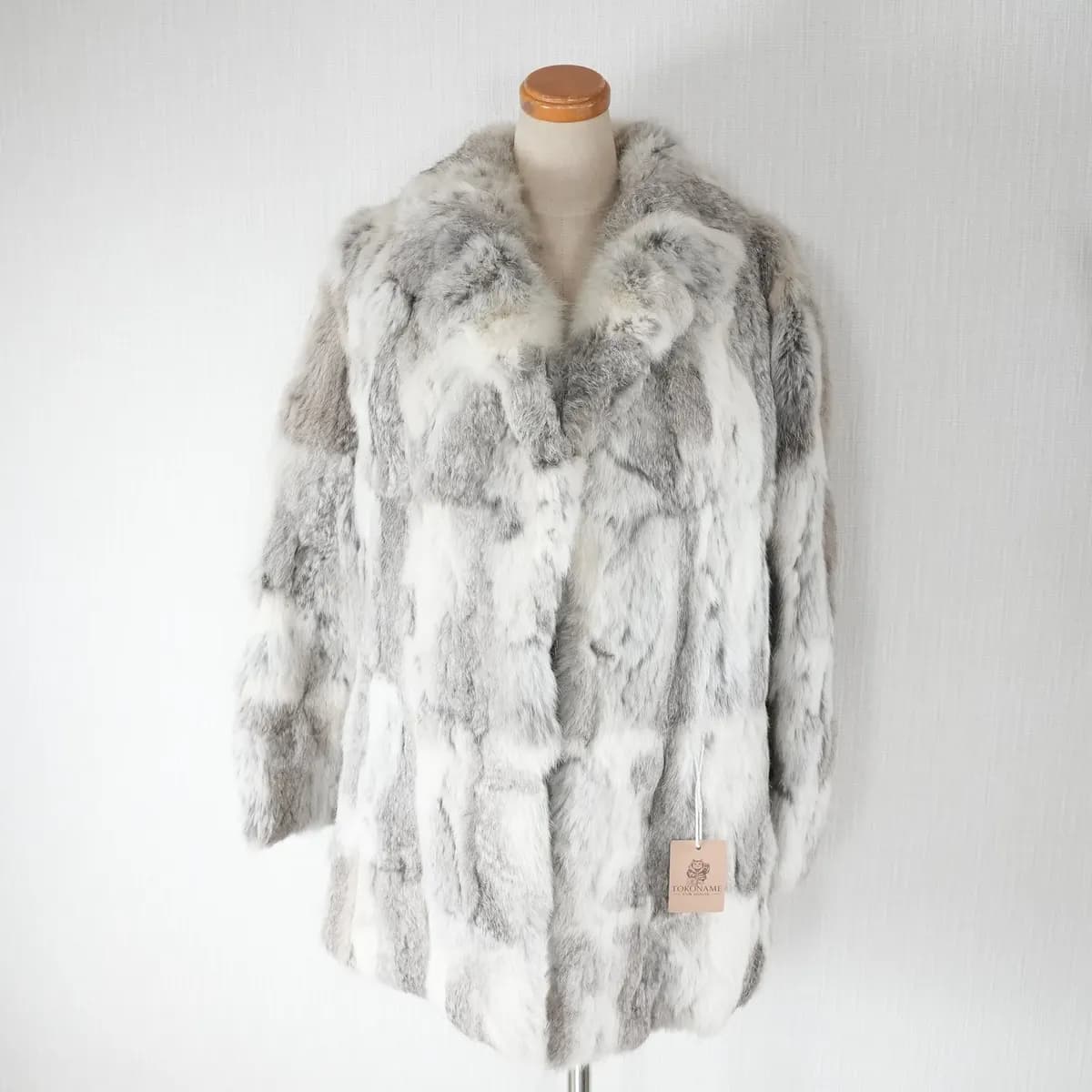
Rabbit is the light, affordable entry point to fur, but it has the shortest working life: the leather is thin and tears easily. On the historical durability scale it scores 5 out of 100, the lowest of the furs listed. It suits someone who wants the look and softness of fur for occasional wear, not a coat for hard daily use.
Look: the fur is thick and fine, in natural colours from white to black, and rabbit has long been dyed — it was historically the base for many imitations of more expensive furs. Rex rabbit is a breed with no guard hairs, only underfur, so the pile is even in length and very soft.
As a coat: light on the shoulders and easy to wear casually. Ordinary rabbit is often used for practical, warm garments; rex rabbit goes into higher-grade pieces.
- Pros: light, soft, affordable; wide range of colours.
- Cons: thin, weak leather; sheds and tears more readily than other furs.
- Warmth / weight / durability: light pelt; low durability (our rule of thumb: rabbit < fox < mink).
- Vintage buying notes: tug gently near the armholes and collar, where tears start. A rabbit garment that is shedding hair is usually dry-rotted and cannot be repaired.
- Also called: lapin (French for rabbit, used as a trade name), rex or rex rabbit; ラビット, ラパン, レッキス on Japanese labels. US labelling rules do not allow names like "chinchilla rabbit" that suggest a different animal.
- See current rabbit pieces in our vintage fur collection →
Chinchilla fur coats
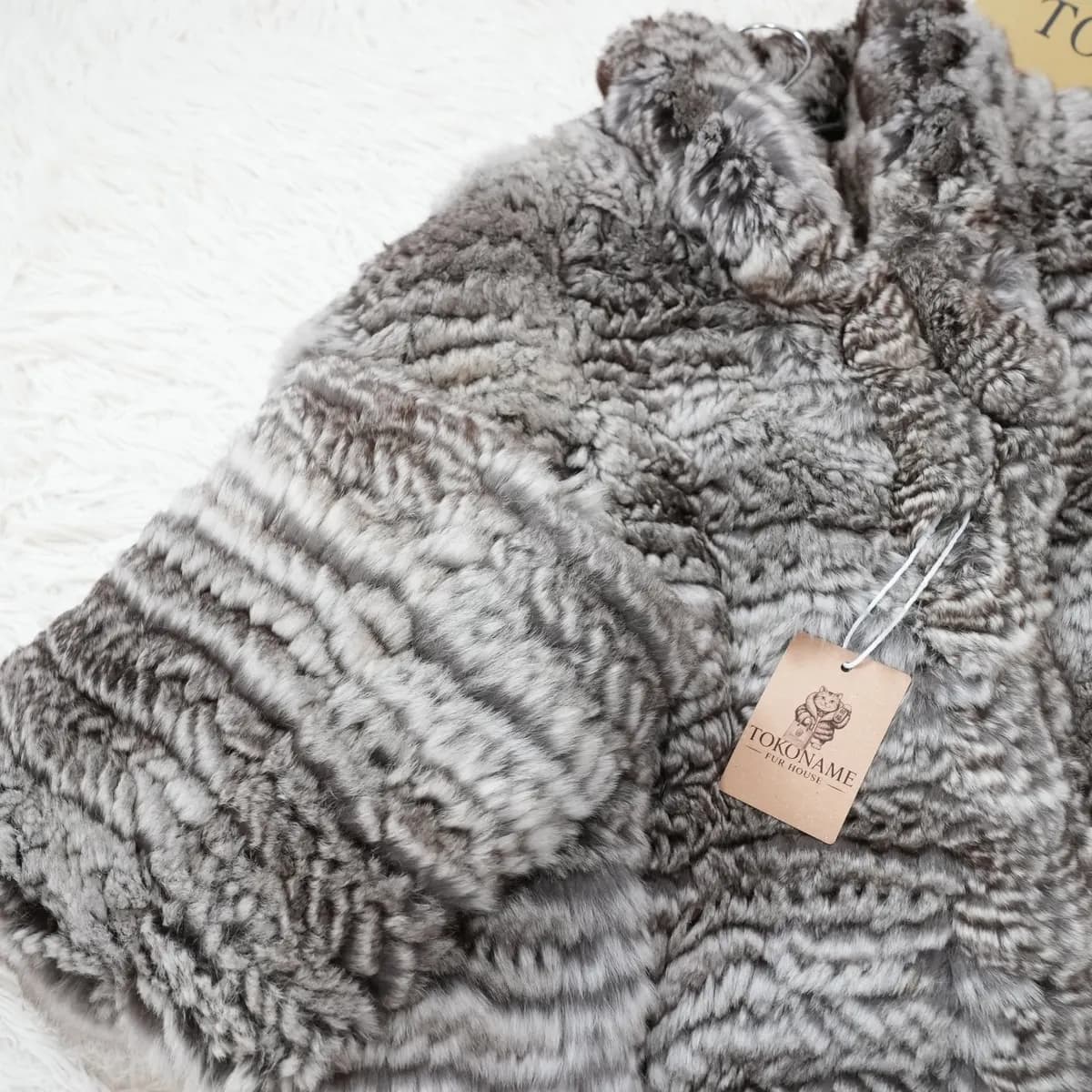
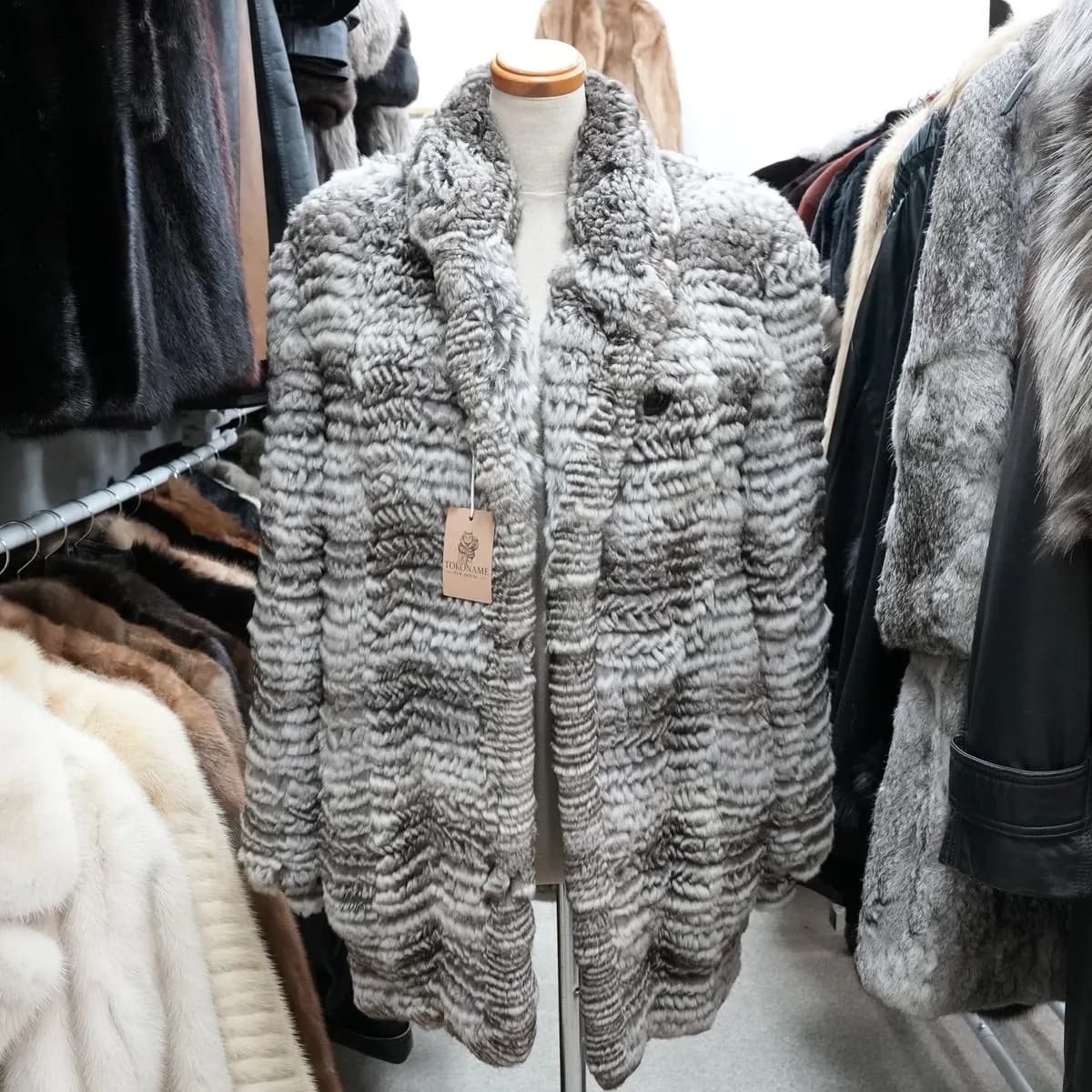
Chinchilla fur is extremely soft and dense — often described as the densest fur of any land mammal — and very light, but the skin is delicate. On the historical scale it scores just 15 out of 100. Choose it for its feel and colour, and wear it with care.
Look: the classic colour is a blue-grey with darker shading, a dark stripe down the back and a white belly; mosaic (white and grey) and all-white types also exist. The colour is usually very even, which suits small garments and linings.
As a coat: velvety and very light. Chinchilla in the fur trade today comes from farmed animals; wild chinchillas became rare through hunting and are protected.
- Pros: exceptionally soft; very dense fur; light pelt.
- Cons: fragile skin; higher price than most furs in our shop.
- Warmth / weight / durability: high warmth (very dense fur); light pelt; low on the historical scale.
- Vintage buying notes: the skin is perishable, so check the leather side for dryness and splits, especially at the underarms and collar, and look for thinning at the shoulders and cuffs.
- Also called: チンチラ on Japanese labels.
- See current chinchilla pieces in our vintage fur collection →
Lamb fur: mouton, karakul and Tibet lamb
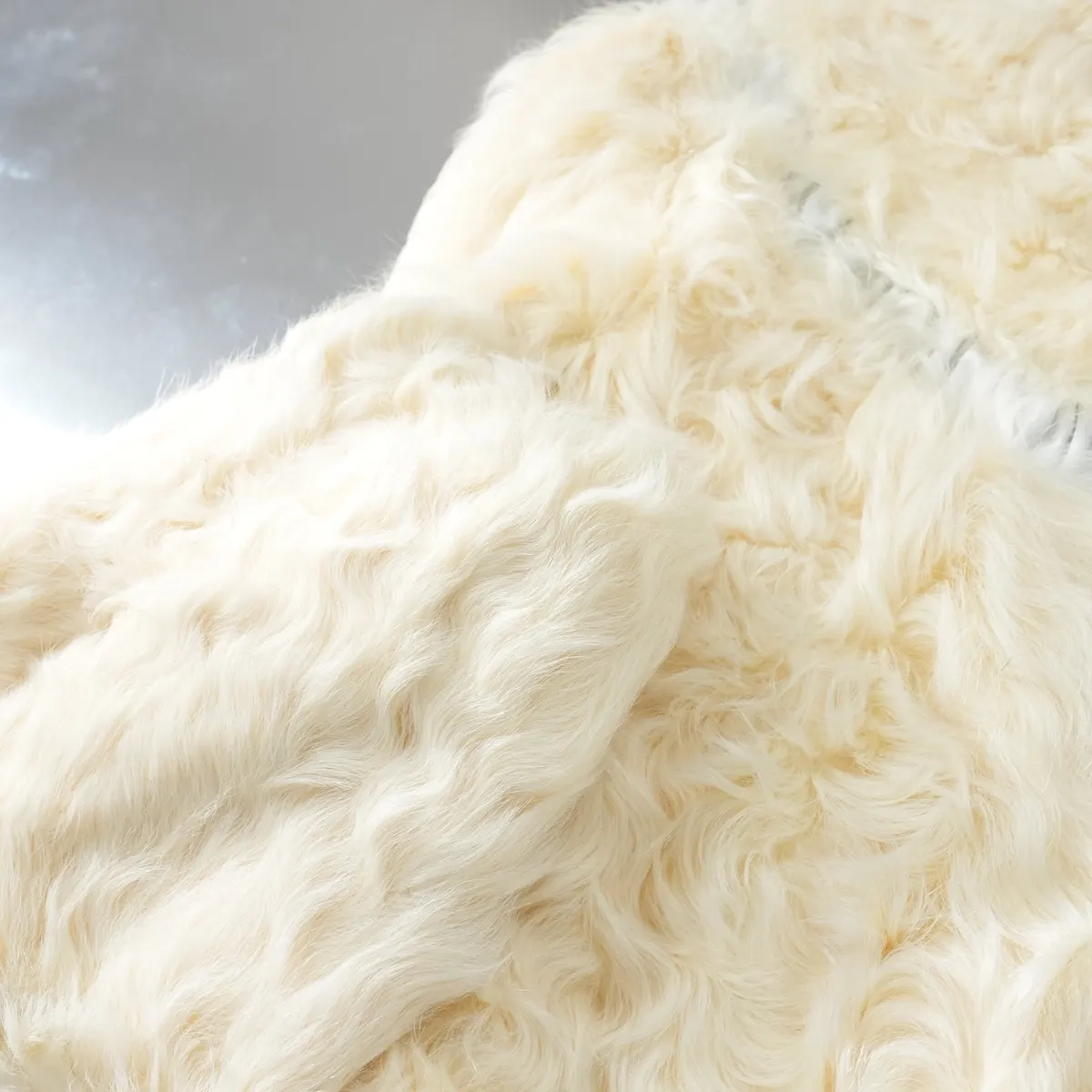
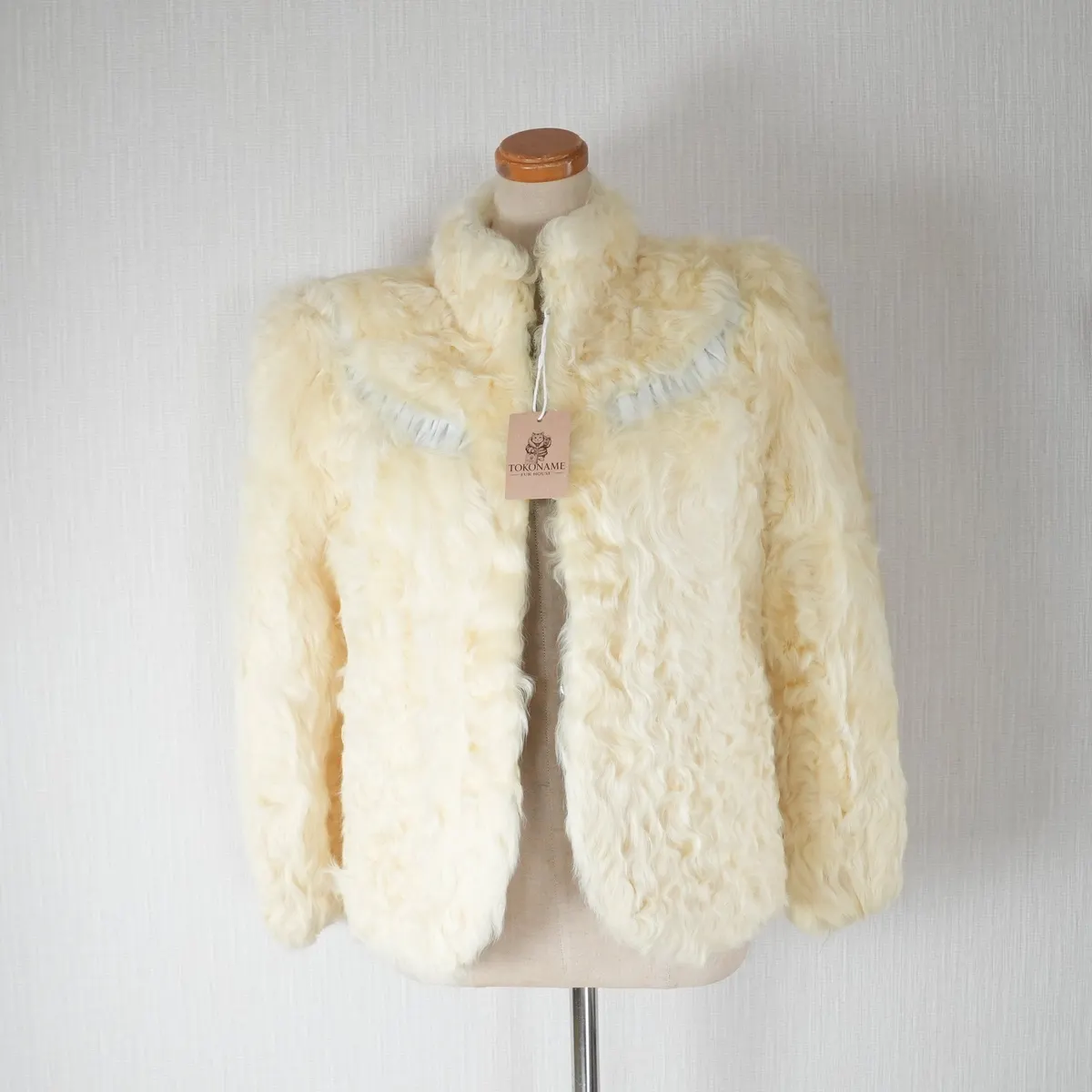
"Lamb" covers several quite different furs from sheep: smooth, sheared mouton; tightly curled karakul (Persian lamb, astrakhan, broadtail); and long, wavy Tibet lamb. Sheepskin is a good natural insulator, and shearling is known as one of the more durable and affordable furs. Which type you want depends on the look: sleek, sculpted or shaggy.
Mouton: under US labelling rules, mouton lamb is lambskin that has been sheared, with the hair straightened, chemically treated and heat-set to give a moisture-repellent finish. It was often dyed brown to resemble beaver.
Karakul: pelts from very young karakul lambs, with a tight, curly pattern, sold as karakul, Persian lamb, astrakhan or swakara. Broadtail is a flat, moiré-patterned, very light pelt; historical sources note it is too delicate for hard wear. Persian lamb scores 65 on the historical scale.
Tibet lamb: soft wool around 12 cm long with a slight wave, the long-haired curly lamb. Despite the name it comes mainly from northern Chinese provinces. Chekiang lamb, like the jacket pictured, is named after the Chinese province now romanised as Zhejiang; US labelling rules list it as a separate lamb type, not Persian lamb.
- Pros: wide range of looks; sheepskin insulates well; shearling is durable.
- Cons: broadtail is delicate, and loosely curled astrakhan rates only 10 on the historical scale.
- Warmth / weight / durability: high warmth (sheepskin); mid pelt weight for Persian lamb; durability varies widely by type.
- Vintage buying notes: check the leather at the underarms and collar, and look at the shoulders and cuffs for worn or thinning hair.
- Also called: ムートン (mouton), カラクール, アストラカン, ペルシャンラム, ブロードテール, チベットラム on Japanese labels.
- See current lamb pieces in our vintage fur collection →
Raccoon fur
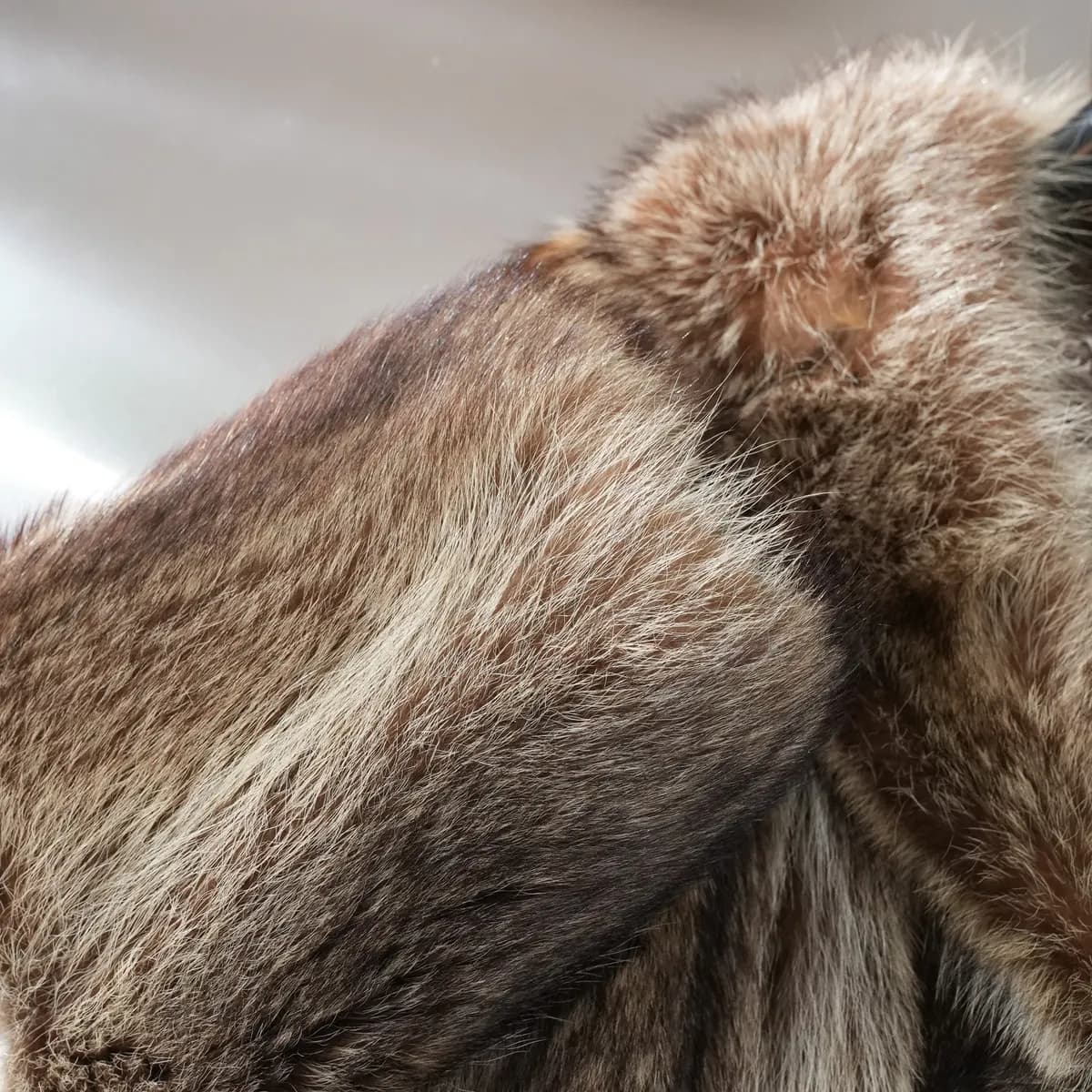
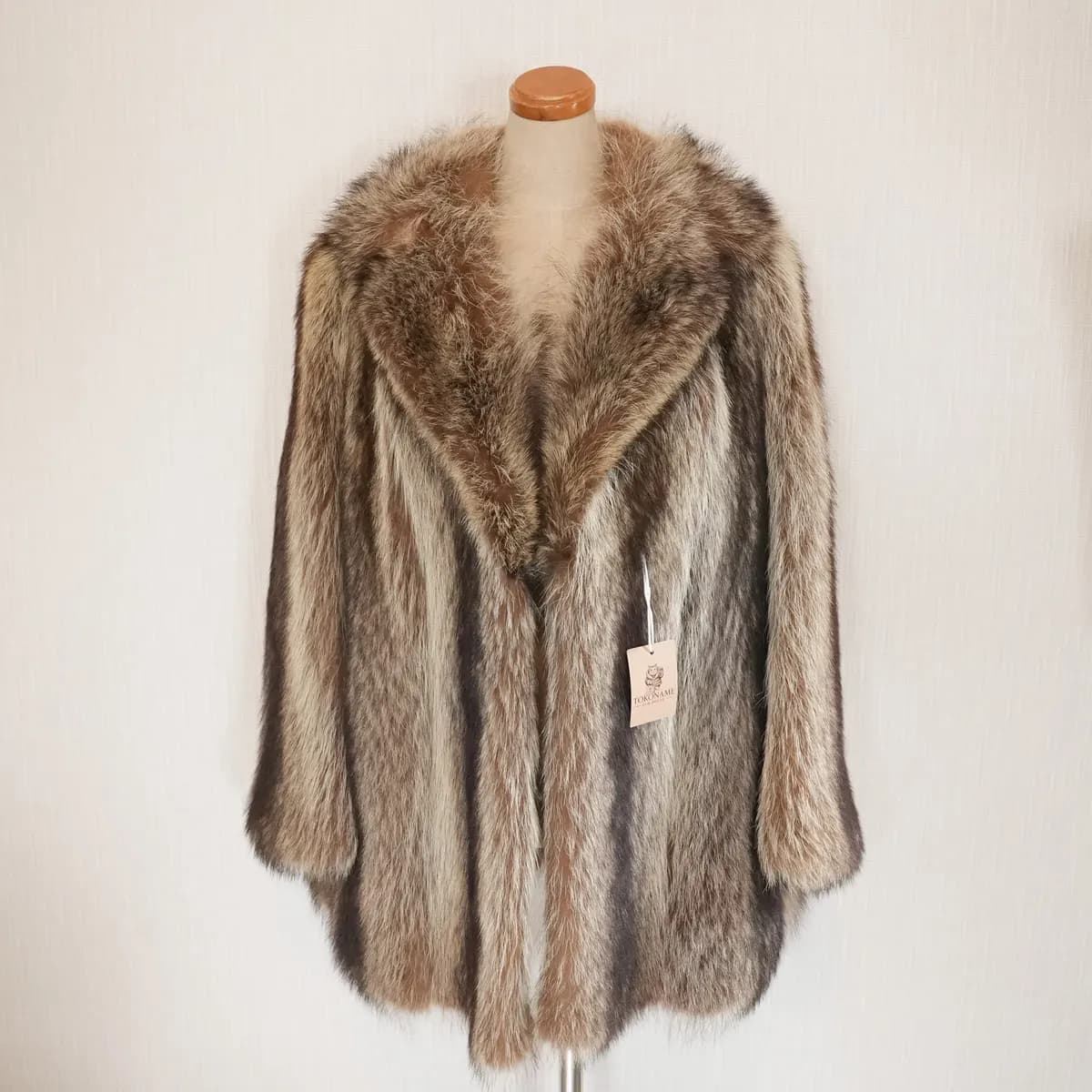
True raccoon fur comes from the North American raccoon (Procyon lotor). It is a different animal from the raccoon dog, or tanuki, whose fur is also often sold as "raccoon" — see the next section. If a listing just says "raccoon", ask which one it is.
Look: a pale brown underfur 1 to 1.5 inches deep under long, grizzled top hair in dark and silvery grey; the most prized skins have a bluish tone, the cheapest a yellowish or reddish-brown. Raccoon has been used in its natural colour and also dyed.
As a coat: used both in its natural colour and dyed. When the top hair is plucked and the underfur is good, the effect is similar to beaver.
- Pros: rated 65 on the historical scale, well above fox.
- Cons: easily confused with raccoon dog in listings.
- Warmth / weight / durability: warm; medium weight in our experience.
- Vintage buying notes: confirm the species before you compare listings, since raccoon and raccoon dog are different animals with different fur.
- Also called: ラクーン or アライグマ on Japanese labels.
- See current raccoon pieces in our vintage fur collection →
| Raccoon | Raccoon dog (tanuki) | |
|---|---|---|
| Species | Procyon lotor | Nyctereutes procyonoides (Japanese tanuki: N. viverrinus) |
| Family | Procyonidae | Canidae — closest to foxes |
| Fur | Pale brown underfur, grizzled grey top hair | Long, coarse guard hairs with black tips over dense underfur |
| Typical trade names | Raccoon | Finn raccoon, Asiatic raccoon, tanuki, murmansky — or just "raccoon" |
Tanuki (raccoon dog) fur: Finn raccoon, Chinese raccoon and more
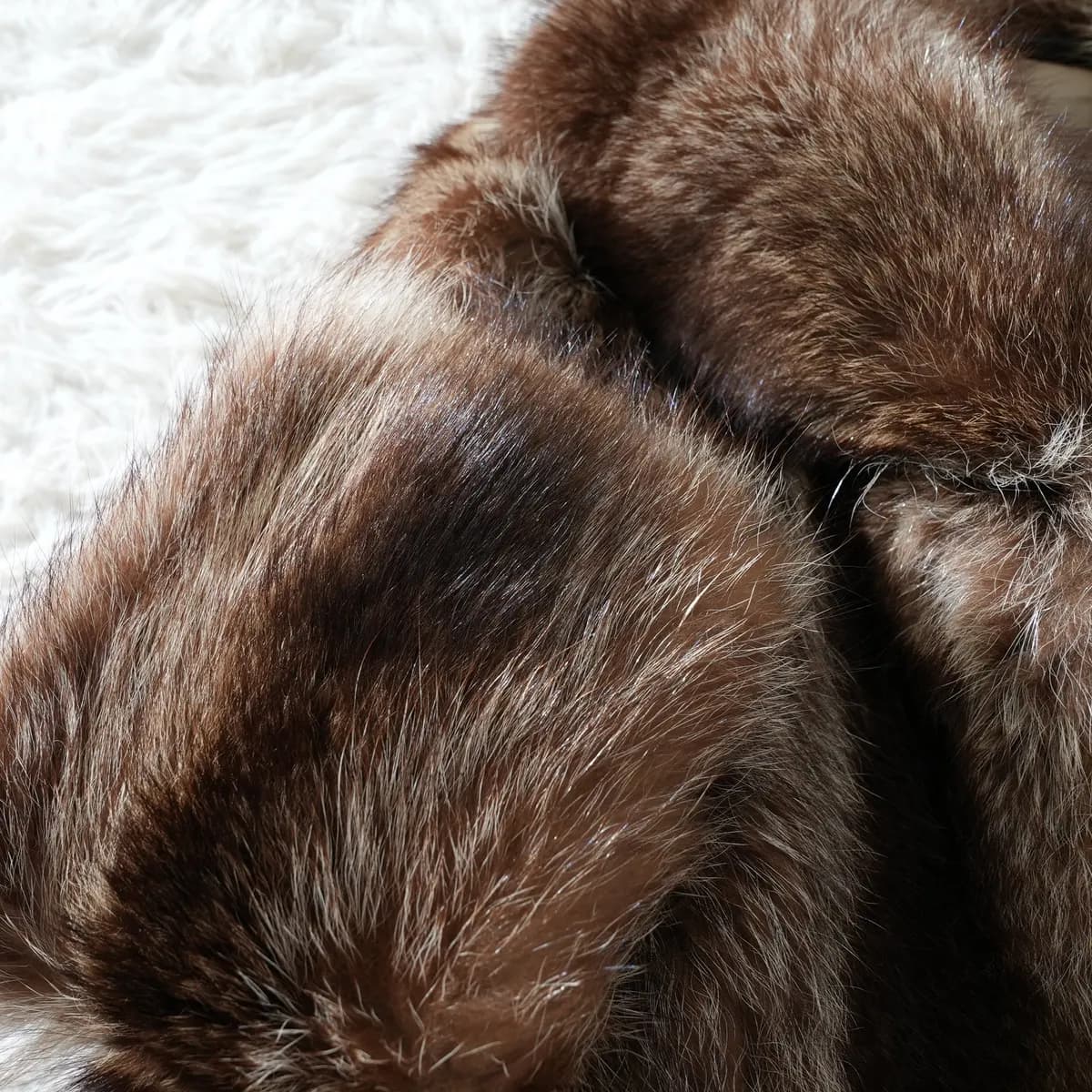
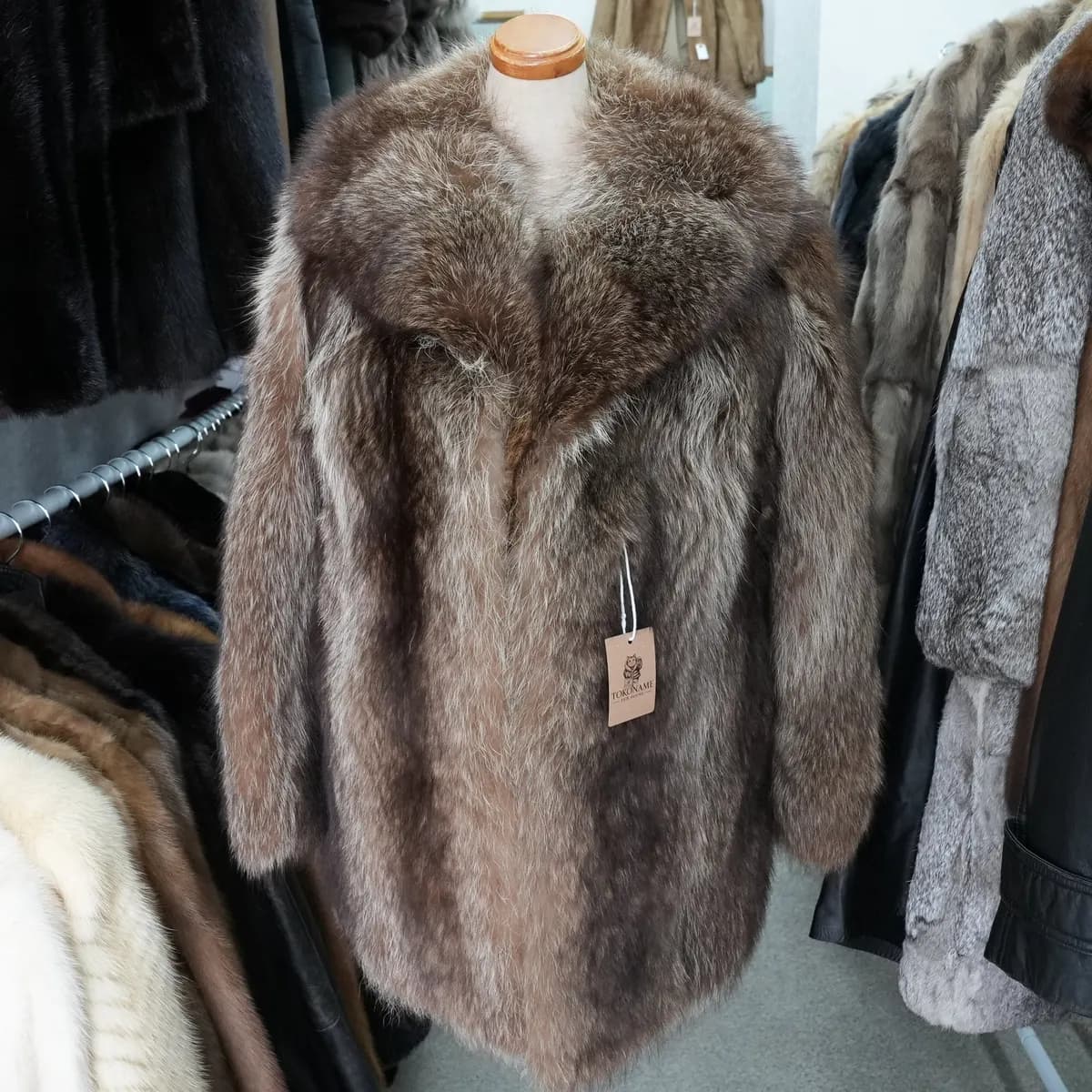
"Finn raccoon", "Chinese raccoon", "Asiatic raccoon" and Japanese "tanuki" all mean the raccoon dog — a member of the dog family closest to the foxes, not a raccoon. Its fur is long and full, with coarse guard hairs over a dense underfur, and it is used both for whole coats and for hood trims. Trade names change with the country of origin, so one fur can appear under several names.
Look: the most common colour is a caramel-brown with grey underfur and black-tipped guard hairs, sometimes with a white fleck at the very tip; dark brown, white, cream and "marble" types also exist, and dyed trims are common. Raccoon dog has the longest fur of the farmed furbearers, longer than red fox.
As a coat: long and full, used for whole garments and for hood trims. In the wild, the winter coat protects the animal down to about −20 to −25 °C.
- Pros: long, full, warm fur — longer than red fox.
- Cons: guard hairs are coarse, and the woolly underfur has a tendency to felt or mat.
- Warmth / weight / durability: high warmth (winter fur with dense underfur); medium weight in our experience.
- Vintage buying notes: check for matted underfur, and check the leather at the underarms and collar.
- Also called: Finn raccoon, Finnraccoon, Asiatic raccoon (the US label name), murmansky, or simply "raccoon"; タヌキ or ラクーン on Japanese labels.
- See current tanuki pieces in our vintage fur collection →
| Trade name | Usual origin | What it is |
|---|---|---|
| Finn raccoon (Finnraccoon) | Finland / Northern Europe, farmed | Raccoon dog |
| Chinese raccoon | China | Raccoon dog |
| Russian raccoon (murmansky) | Russia | Raccoon dog |
| Japanese tanuki | Japan | Japanese raccoon dog — shorter fur with less insulation than mainland raccoon dogs |
Nutria fur coats
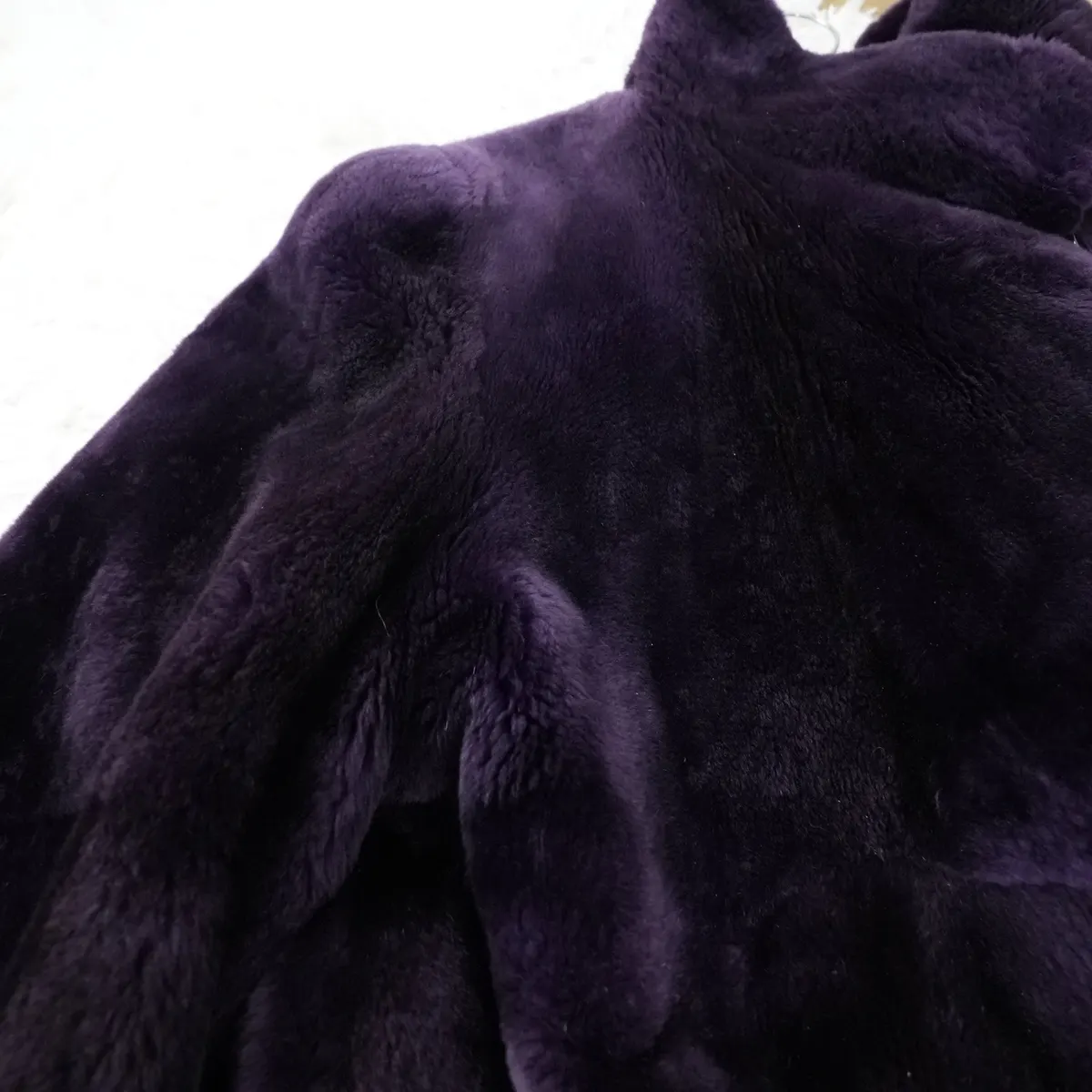
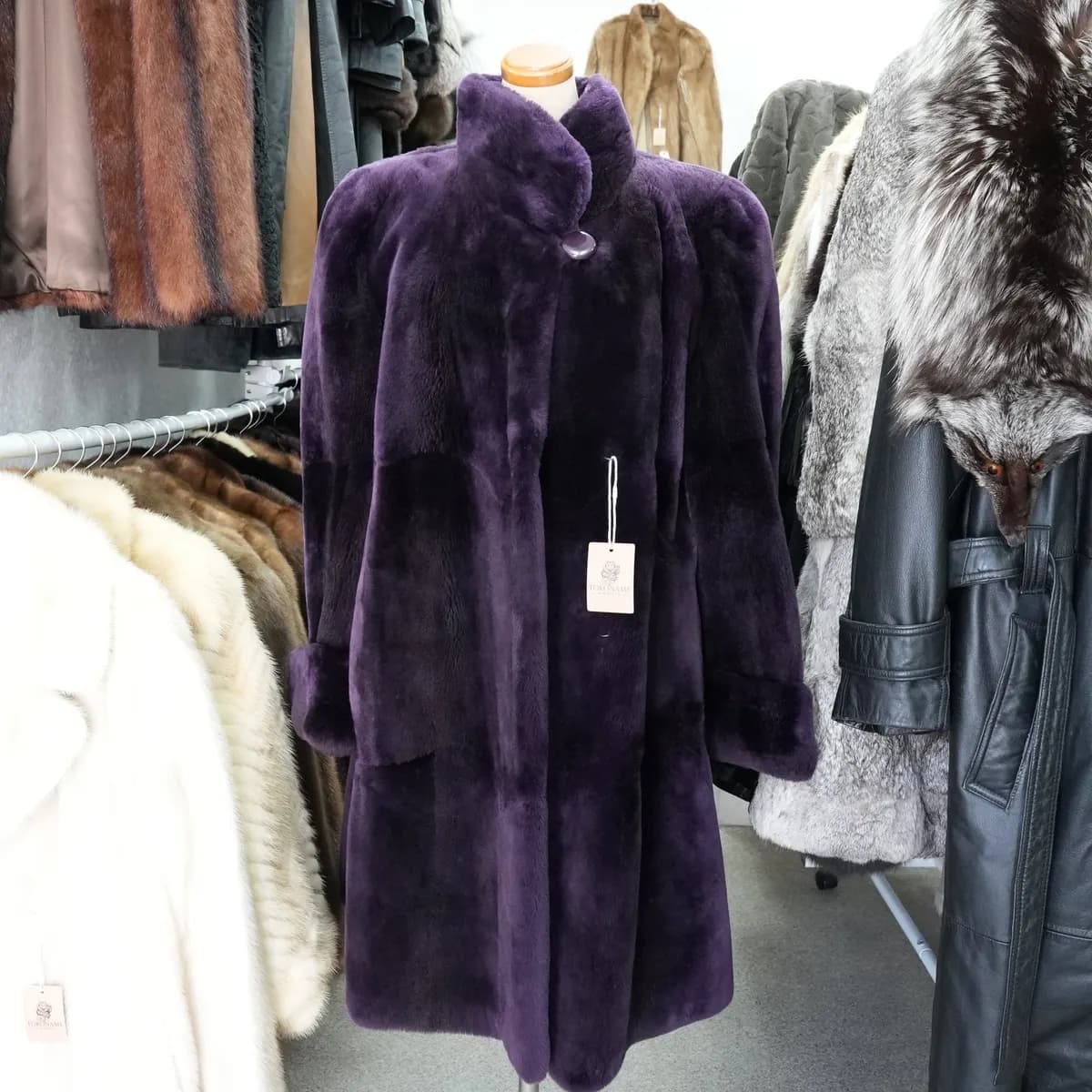
Nutria is a South American rodent (also called coypu) whose fur is usually plucked or sheared to leave just its very soft underfur. The result is a smooth, plush, mid-weight fur that takes dye well. It became popular as a fashion fur in the 1930s.
Look: natural colours run from light to rich brown, the darker shades being the more valuable, but nutria is often dyed, as in the purple coat pictured.
As a coat: smooth, close and easy to wear, and light enough to be used for linings as well as coats, hats and trims.
- Pros: very soft sheared underfur; easy to dye in many colours; middle weight.
- Cons: rated 25 on the historical scale when plucked.
- Warmth / weight / durability: mid pelt weight; medium durability in our experience.
- Vintage buying notes: on sheared fur, look for rubbed or discoloured patches at the shoulders and cuffs.
- Also called: coypu; ヌートリア on Japanese labels.
- See current nutria pieces in our vintage fur collection →
Beaver and sheared beaver
Beaver is a hard-wearing fur: on the historical scale natural beaver scores 90 and plucked beaver 85, close to otter. Its underfur is extremely dense — a beaver's coat carries 12,000 to 23,000 hairs per square centimetre — which is what keeps the animal warm in freezing water. As a coat it is a medium weight.
Look: the coarse, glossy over-hair is usually plucked out, because the close, bluish-brown underfur is the attractive part. Sheared beaver is shorter still, with a velvet-like, plush surface.
As a coat: smooth, dense and practical. Beaver has long been used for muffs, stoles, collars and trims as well as coats.
- Pros: very durable; very dense, warm underfur.
- Warmth / weight / durability: high warmth; medium weight; high on the historical scale.
- Vintage buying notes: check the leather at the underarms and collar, and look for thinning at the shoulders and cuffs.
- Also called: ビーバー on Japanese labels.
- See current vintage fur pieces →
Lynx fur coats
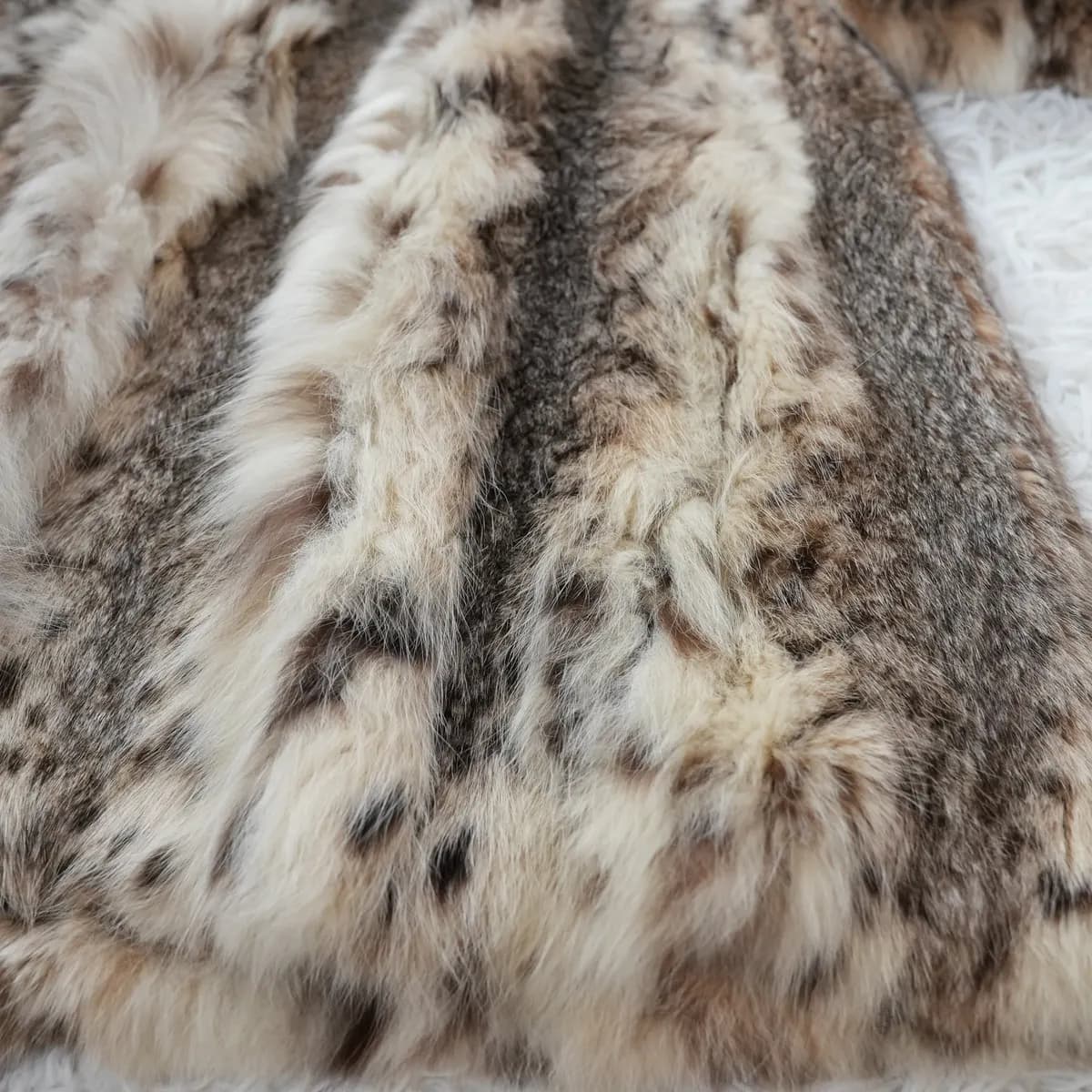
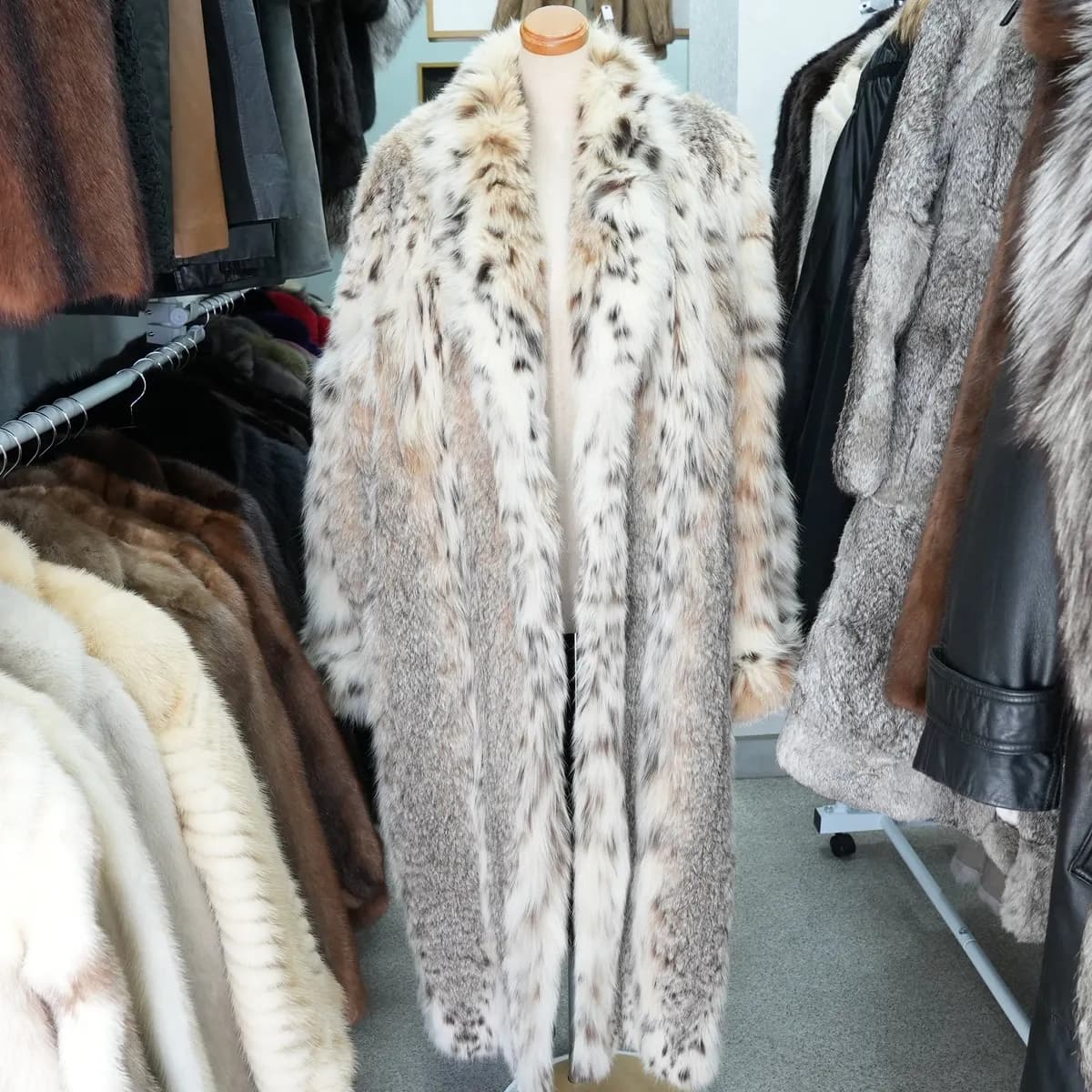
Lynx is a long, silky, pale fur marked with spots, often mistaken for fox at first glance. It is less durable than fox — 25 on the historical scale — so it suits occasional wear. The most sought-after coats use only the white belly fur with dark spots.
Look: the top hair is fine, silky and flowing, up to about 4 inches long, in pale grey with darker streaks and spots; the flank fur is longer and white with pronounced spots. Skins with a bluish tone have traditionally been valued above sandy or reddish ones.
As a coat: long, silky and pale.
- Pros: long, silky, distinctive spotted fur.
- Cons: less durable than fox.
- Warmth / weight / durability: mid pelt weight; lower durability than fox.
- Vintage buying notes: look for thinning or discoloured fur at the shoulders and cuffs, and check the leather at the underarms and collar.
- Also called: リンクス on Japanese labels. On US labels "lynx" means Canada or Eurasian lynx, while "lynx cat" means bobcat.
- See current lynx pieces in our vintage fur collection →
Weasel and kolinsky
Kolinsky is the fur of the Siberian weasel, a small member of the marten family. It is short-haired and naturally yellow to reddish, and was generally dyed to imitate other marten-family furs. Its tail hair is famous for artists' "sable" brushes.
Look: short, regular underfur and top hair, uniform in colour, and very light.
- Pros: light, even fur; takes dye well.
- Cons: short, rather weak underfur; 25 on the historical scale.
- Warmth / weight / durability: mid pelt weight in the 1922 data; low-to-moderate historical durability.
- Vintage buying notes: dyed kolinsky was made to imitate other marten-family furs such as sable — check the label for the species name.
- Also called: Siberian weasel, Chinese weasel, Tartar sable; Japanese weasel (Mustela itatsi) appears on US labels as "Japanese weasel"; コリンスキー or イタチ on Japanese labels.
- See current vintage fur pieces →
Marten — and what "Canadian sable" really is
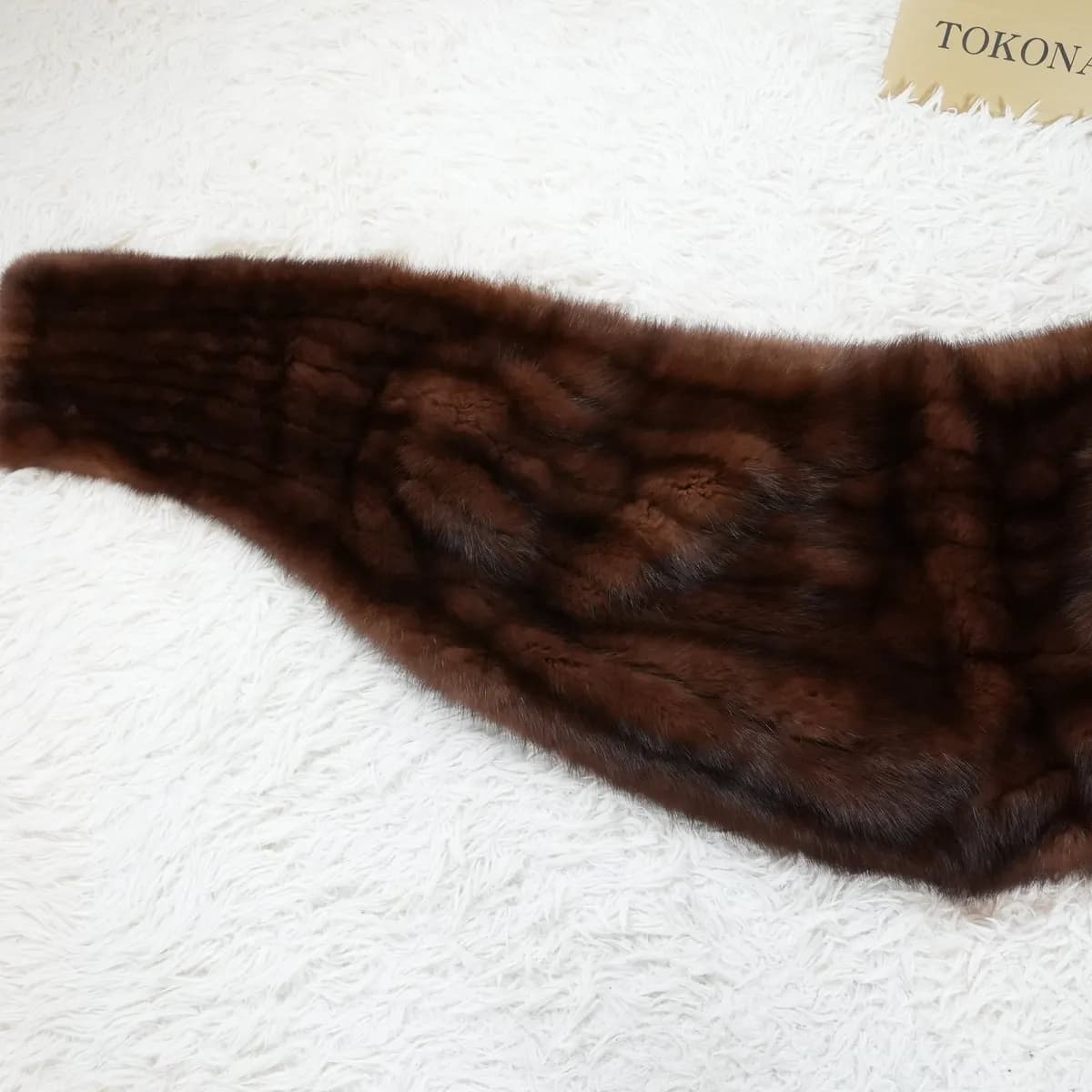
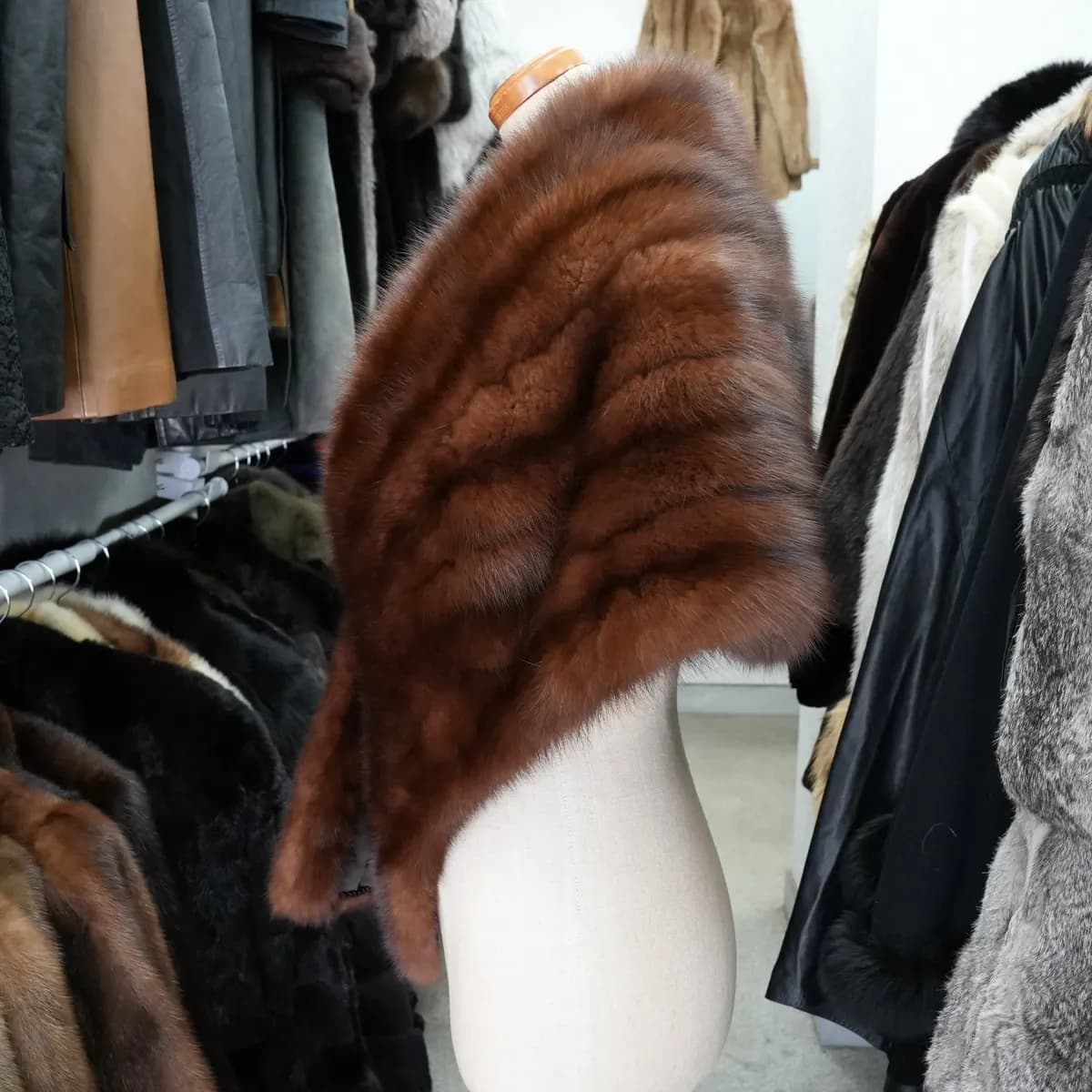
"Canadian sable" and "American sable" are trade names for marten — the American marten, Martes americana — not true sable (Martes zibellina), which comes from Russia and Siberia. The two are close relatives and look alike, but sable is softer and silkier, and the two sit at very different price levels. Read the species name, not just the word "sable", when you compare listings.
Why the name exists: a 1922 trade reference explains that American and Canadian skins were sold as martens, but because many were very dark and almost as silky as Russian sable, they came to be called sable. US labelling rules still list "Sable, American" as an accepted name for Martes americana, so the term is legal on US labels — it just does not mean Russian sable.
Look: marten fur is mid-length and silky, from pale grey through orange-brown to dark brown. It has an oily texture similar to mink but longer, silkier hair, more like fox. European martens include the pine (baum) marten and the stone marten, whose most valued skins have a bluish cast.
As a coat: soft and silky; stone marten stoles were popular in the 1950s, and the piece pictured is an oversized shawl.
- Pros: silky, mid-length fur; durable hair; pine marten scores 65 on the historical scale.
- Cons: easily confused with true sable by name.
- Warmth / weight / durability: mid pelt weight; natural pine marten scores close to natural mink on the historical scale.
- How to avoid confusion: look for "Russian sable", "Sobol" (Russian for sable) or Martes zibellina on the label; treat "Canadian", "American" or unspecified "sable" as marten until proven otherwise; compare softness by stroking in different directions — true sable stays smooth in every direction; and ask the seller to confirm the species.
- Vintage buying notes: pale marten skins were historically dyed to imitate Russian sable, so an even, very dark colour is not proof of sable.
- Also called: American marten, pine marten, Canadian sable, American sable; マーテン or カナディアンセーブル on Japanese labels.
- See current marten pieces in our vintage fur collection →
| Russian sable | "Canadian / American sable" | |
|---|---|---|
| Species | Martes zibellina | Martes americana (American marten) |
| Range | Urals, Siberia, northern Mongolia | North America |
| Fur | Softer, silkier; smooth in every direction | Silky but less so; pale to dark brown |
| Price level | Top of our range | Much lower |
Squirrel fur
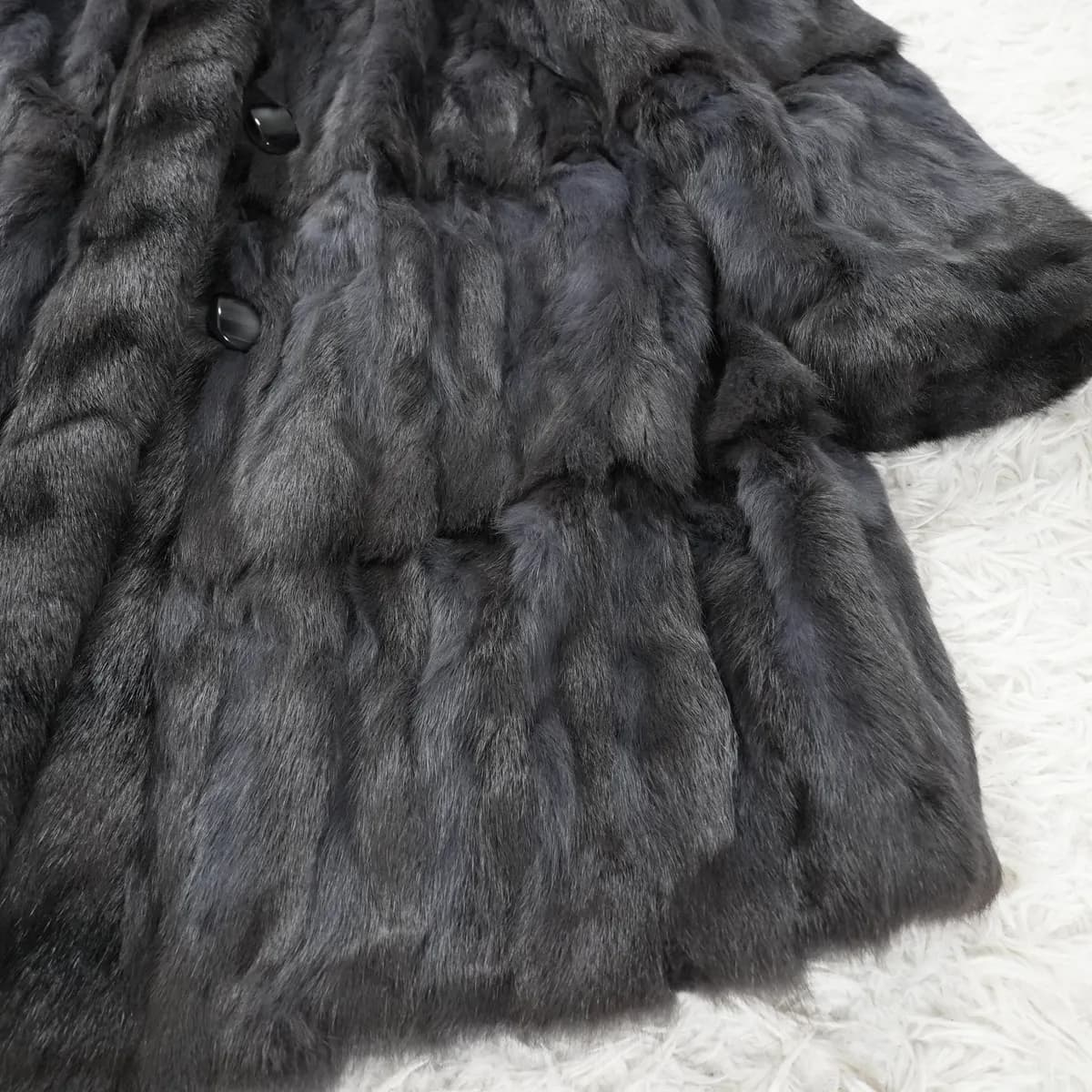
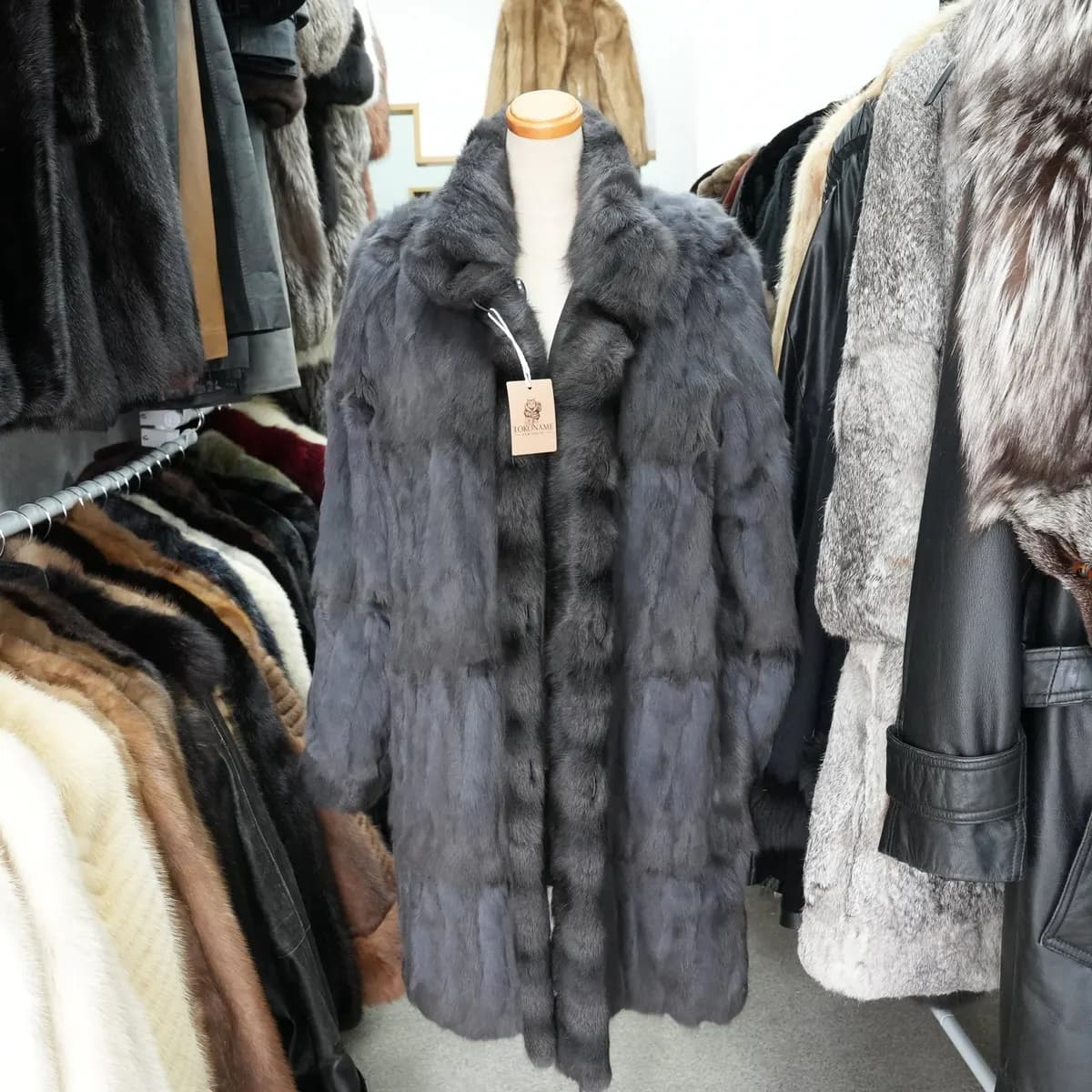
Squirrel is a very light fur with a close, even pile, traditionally from Russian and Siberian squirrels. The pelts are light but tough, and the backs and bellies are worked separately, which gives squirrel garments their pieced, patterned look. It is a good choice if weight is your main concern.
Look: the backs range from clear blue-grey to reddish-brown; the bellies are white or yellowish. As a coat: light and soft; the piece pictured is reversible.
- Pros: very light; tough skins for their weight.
- Cons: small pelts (about 10 × 5 inches) mean a coat is pieced from many skins.
- Warmth / weight / durability: light pelt; 20–25 on the historical scale.
- Vintage buying notes: check the leather at the underarms and collar for splits, and the shoulders and cuffs for thinning.
- Also called: Russian squirrel; リス on Japanese labels.
- See current squirrel pieces in our vintage fur collection →
Ermine
Ermine is the white winter coat of the stoat (Mustela erminea), with the black tail tips that appear on royal and ceremonial robes. It is short, even and light, and has mostly been used for trims, stoles and ceremonial garments rather than everyday coats.
Look: pure white in midwinter, with a black-tipped tail; short, even underfur and slightly longer top hair. The leather is light and close in texture.
- Pros: very light; distinctive white with black accents.
- Cons: small pelts (about 12 × 2.5 inches).
- Warmth / weight / durability: lightest pelt in the 1922 data; 25 on the historical scale.
- Vintage buying notes: check white fur for discolouration at the shoulders and cuffs.
- Also called: stoat; アーミン or オコジョ on Japanese labels.
- See current vintage fur pieces →
Fitch fur
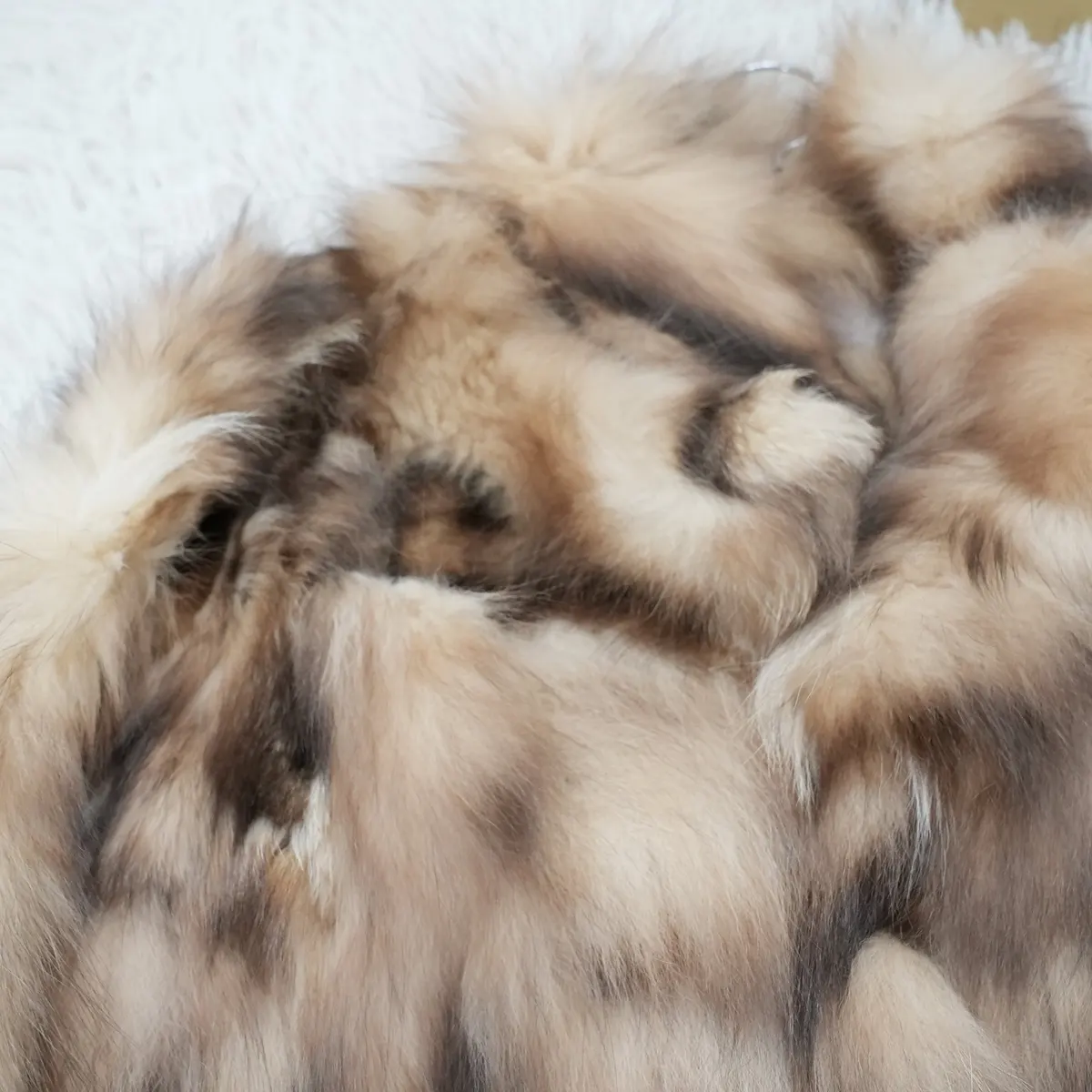
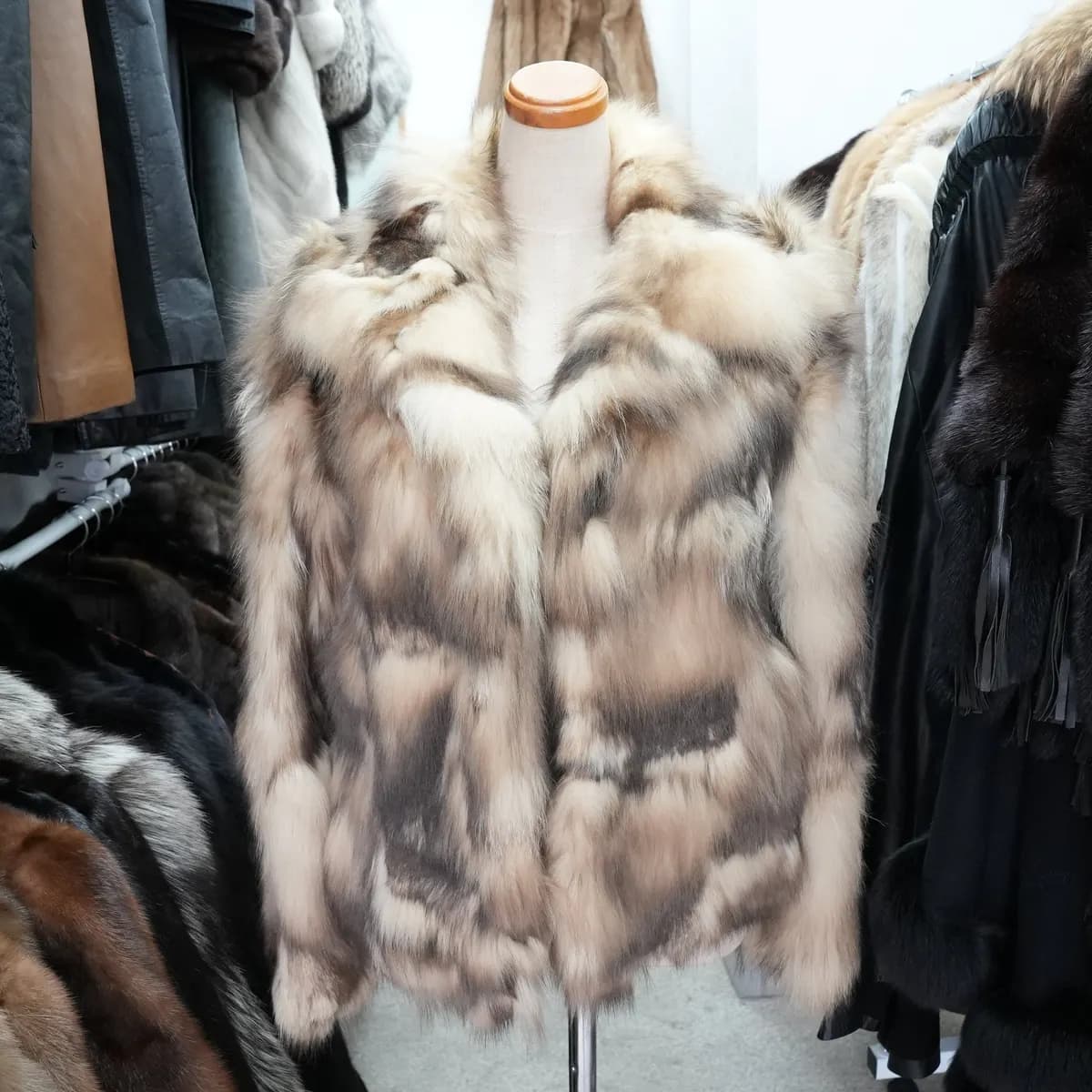
Fitch is the fur of the European polecat. Its look is distinctive: dark brown-black guard hairs over a pale, yellowish underfur that shows through, giving a contrasting, two-tone effect. It is used for jackets, capes and coats, and is especially valued for trims.
Look: the top hair is fine, long and open in growth, so the light underfur is visible. Historically, smaller Russian skins were often dyed as a substitute for sable.
- Pros: distinctive two-tone look.
- Cons: polecat skins can carry an odour that is difficult to remove.
- Vintage buying notes: smell the piece, especially the leather side, and check the leather at the underarms and collar.
- Also called: polecat; フィッチ on Japanese labels.
- See current fitch pieces →
What to check when buying vintage fur
Whatever the type, the leather decides how long a vintage coat will last. Check that it is supple, not dry, and has no tears, and give extra attention to the places where each type wears first.
If you can handle the coat:
- Leather: it must not be dry or torn. This is the essential check.
- Underarms and collar: this is where tears appear first.
- Sound: move the coat in your hands. A crackling or rustling sound means the leather has dried out — avoid it.
- Softness: feel the suppleness of the dressing. In general, softer is better.
- Mass-produced new fur coats: some inexpensive new fur coats are made by stretching the pelts thin. They feel light and soft, but tend to lack the density and durability of a well-made older coat. They often have fresh, eye-catching designs, so weigh both sides. A vintage coat gives an existing garment a second life — worth weighing against buying new.
If you can only see photos
Look closely at the shoulders and cuffs, where condition shows first: thinning fur and discolouration are the warning signs. Sellers who show flaws in their photos and descriptions are easier to trust than those who do not. Before you buy, compare several items and conditions on the same site to see whether the shop describes condition honestly.
For a step-by-step check of real fur, see How to authenticate vintage fur; for fit, see the vintage fur sizing guide. Free worldwide shipping. No customs fees at delivery.
Fur names in English and Japanese
Trade names often hide a different animal, and buyers shopping from Japan will meet Japanese labels as well. This table matches common English and trade names to the Japanese label and to what the fur actually is.
| English / trade name | Japanese label | What it actually is |
|---|---|---|
| Mink (dark, mahogany, demi-buff, pastel, sapphire, pearl, white) | ミンク (デミバフ, サファイア, パステル, パール …) | Mink; the colour names are colour types |
| Silver / red / cross fox | シルバーフォックス, レッドフォックス, クロスフォックス | Red fox (colour phases) |
| Blue fox | ブルーフォックス | Arctic fox |
| Russian sable, Sobol, Barguzin sable | セーブル, ロシアンセーブル | Sable (Martes zibellina) |
| Canadian sable, American sable | カナディアンセーブル | American marten (Martes americana), not sable |
| Marten, pine marten, stone marten | マーテン | Marten |
| Rabbit, lapin, rex | ラビット, ラパン, レッキス | Rabbit |
| Chinchilla | チンチラ | Chinchilla |
| Mouton | ムートン | Sheared, straightened and treated lambskin |
| Persian lamb, karakul, astrakhan, broadtail | ペルシャンラム, カラクール, アストラカン, ブロードテール | Karakul lamb |
| Tibet lamb | チベットラム | Long-wool lamb |
| Raccoon | ラクーン, アライグマ | Raccoon (Procyon lotor) |
| Finn raccoon, Chinese raccoon, Asiatic raccoon, murmansky | タヌキ, ラクーン | Raccoon dog, not raccoon |
| Nutria, coypu | ヌートリア | Nutria (Myocastor coypus) |
| Beaver | ビーバー | Beaver |
| Lynx ("lynx cat" = bobcat) | リンクス | Lynx |
| Squirrel | リス | Squirrel |
| Ermine | アーミン, オコジョ | Stoat in its white winter coat |
| Kolinsky | コリンスキー, イタチ | Siberian weasel |
| Fitch | フィッチ | European polecat |
Protected species we do not handle
Furs from species listed in CITES Appendix I — such as leopard, snow leopard and ocelot — are restricted in international trade today, and we do not handle them.
Frequently asked questions
Which fur is the warmest?
All of the main fur types are warm; in our experience rabbit is a step below the others. Warmth depends more on how dense the underfur is than on how long the hair is — beaver and chinchilla have very dense underfur, and sheepskin and raccoon dog winter fur are also strong insulators.
What is the most durable fur?
Among the furs most people shop for, mink is the hard-wearing choice; our rule of thumb is rabbit < fox < mink. On a widely cited 1922 durability scale (otter = 100), natural beaver scores 90, natural mink 70, sable 60, fox 40, chinchilla 15 and rabbit 5.
Mink vs fox: which should I buy?
Choose mink for everyday wear and long life — it is shorter, denser and more durable. Choose fox for volume and a glamorous look, accepting that it wears out sooner than mink. See the mink and fox guides for the varieties.
Is Canadian sable real sable?
No. "Canadian sable" and "American sable" are trade names for the American marten (Martes americana). True sable is Martes zibellina from Russia and Siberia, which is softer and silkier and sits at a much higher price level. Look for "Russian sable" or "Sobol" on the label.
What is the difference between raccoon and tanuki fur?
Raccoon fur comes from the North American raccoon (Procyon lotor). Tanuki is the raccoon dog (Nyctereutes), a member of the dog family, and it is sold as Finn raccoon, Chinese raccoon, Asiatic raccoon or simply "raccoon". If a listing says only "raccoon", ask which animal it is.
Is rabbit fur a good choice for a first fur coat?
It is light and the most affordable, but its leather is thin and tears easily, so it suits occasional wear. For a first coat you plan to wear often, mink usually lasts much longer.
Related category
Fur