
14 min read
Fox Fur Guide: Silver, Blue, Shadow, Red and Other Fox Types Explained
A guide to vintage fox fur: silver, blue, shadow, red, Golden Island, platinum and cross fox, silver vs blue fox, SAGA labels and what to check.
Fox fur is long-haired, full and light-catching: it gives a coat volume and glamour, in natural colours that run from near-black silver fox to pale shadow and platinum fox. On durability it sits in the middle — as a general rule of thumb, longer-wearing than rabbit but not as hard-wearing as mink.
It suits buyers who want a statement piece for winter evenings, travel or occasional wear, and who are happy to treat it with a little care. This guide, from TOKONAME FUR HOUSE, a vintage fur store in Tokoname, Aichi, Japan, explains how fox fur is built, the eight fox types we have carried, how silver fox and blue fox differ, and what to check before you buy a vintage fox coat.
Fox fur basics
Every fox coat is made of two layers of hair: long guard hairs on the outside and a dense underfur beneath. Most fox sold as fur comes from two species — the red fox (Vulpes vulpes), which includes silver, cross and red fox, and the arctic fox (Vulpes lagopus), which gives blue fox and its pale relatives. The colour names on vintage labels are trade names for colour types, not separate species.
Guard hair and underfur
The guard hairs give fox its shine and volume; the underfur gives it warmth. On the arctic fox, the winter guard hair is about 4.6 cm long and the undercoat about 3.8 cm, according to Wikipedia's article on arctic fox fur. On silver fox, the underfur is described as unusually long and dense.
The fur trade grades fox on exactly these two layers. Saga Furs, the Finnish fur auction house, defines its top regular fox grade, Saga Royal, as a skin with "dense underwool and resilient, even guard hair". When you look at a vintage coat, those are the two things to judge: does the underfur still feel thick when you part the hair, and do the guard hairs stand up evenly rather than lying flat, broken or thinned?
Warmth and durability
Fox is a warm fur, and its durability is moderate. As a general rule of thumb from our own handling of vintage coats: rabbit < fox < mink — fox outlasts rabbit, but a mink coat will usually take more everyday wear.
On warmth, the arctic fox — the species behind blue, shadow and other pale fox types — has a winter coat widely described as giving the best insulation of any mammal, with about 70% of it fine underfur. A coat made from it is still a garment, not an animal in the wild, but dense underfur is the reason fox feels warm.
Where fox wears first is the long guard hair at friction points — cuffs, hem and collar edge — and, as with any fur, the leather underneath as it ages. See the checklist further down this page.
Where vintage fox comes from
Most fox in vintage coats is farmed fox sold through fur auctions. Fox farming began with silver fox: Charles Dalton and Robert Oulton started breeding silver foxes on Prince Edward Island, Canada, in 1894, and farm-bred silver fox fur was worth far more than wild pelts at the time.
In the Nordic countries, Saga Furs was founded in 1938 by the Finnish Fur Breeders' Association and is based in Vantaa, Finland. A 1989 Spanish fur-trade directory describes the SAGA FOX label as used only for fox pelts bred in the Scandinavian countries. Norway and Finland bred their own very light-coloured blue fox type, and the platinum fox, a colour mutation of silver fox, was bred in Norway in the 1930s. Today Saga Furs lists more than 20 named fox types, from Blue Fox and Silver Fox to Golden Island, Blue Frost and Platinum.
Why fox is so common in Japanese vintage
Fox is one of the two largest categories in our stock, alongside mink — of the fur pieces we have listed online, more than 200 have been fox. Silver fox is the fox type we see most often, followed by blue fox.
Much of this stock has been turning over inside Japan for decades, often with careful seasonal storage, which is why well-kept fox coats still surface here. Our buyer's guide to vintage fox fur in Japan covers the shapes you will find and the Japan side of buying; this page focuses on the fur itself.
How to read a fox label: SAGA, SAGA Royal and EMBA
SAGA is the label you will see most often on vintage fox in Japan — it appears in the titles of more than 150 of our listings, and "SAGA Royal" in about 30. It is an auction-house label for graded pelts, not a designer brand.
EMBA appears on some vintage fox listings too, including a few of ours. EMBA began as the name of an American mink breeders' association (adopted in 1948) and became part of American Legend in 1986, so it is a mink breeders' label, not a fox grade. On a fox coat, judge the fur itself.
- SAGA / SAGA FOX: Saga Furs' label. In the 1989 trade directory it is described as reserved for fox pelts bred in the Scandinavian countries.
- SAGA FOX ROYAL / SAGA Royal: in the same directory, a gold label for first-quality Scandinavian fox. Saga Furs today defines Saga Royal as "skin of very high quality" with dense underwool and resilient, even guard hair.
- SAGA FOX "Superb Quality" (silver label): second quality in the 1989 directory.
- SAGA (current grades): Saga Furs' labels today cover Lumi Royal, Royal, Saga and Saga I quality classes, for mink, fox and Finnraccoon; pelts below those classes are not eligible.
- EMBA: an American mink breeders' association label — see the mink fur guide for mink labels.
Fox types and colours, one by one
Below are the eight fox types TOKONAME FUR HOUSE has carried, from the most common (silver fox) to the rarest (platinum and cross fox, one piece each so far). Each has a close-up of the fur and, where we have one, the same coat on a mannequin. The photos are of real coats from our shop.
Japanese listings use katakana names, so each section gives the Japanese name you are likely to see. See current fox pieces →
Silver fox
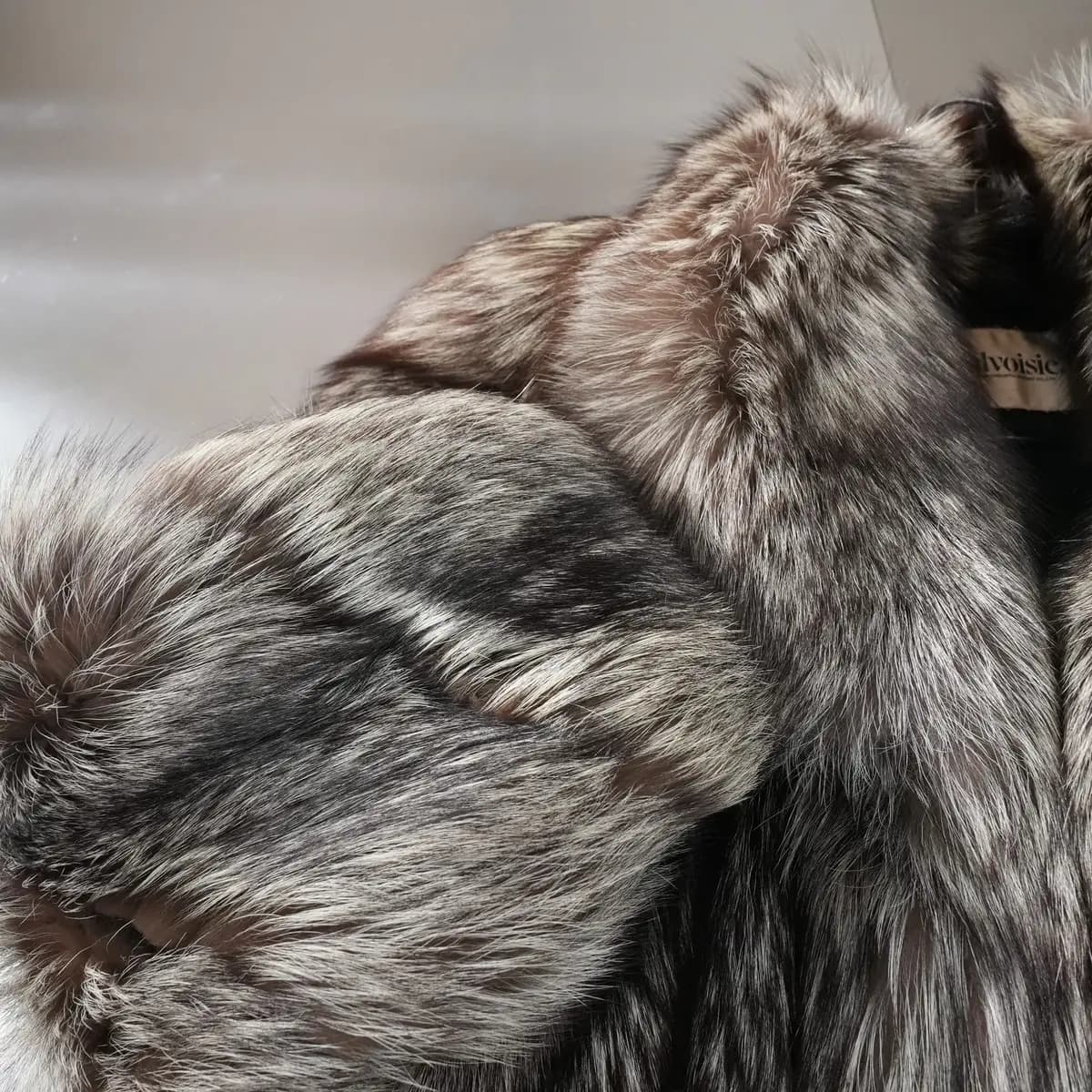
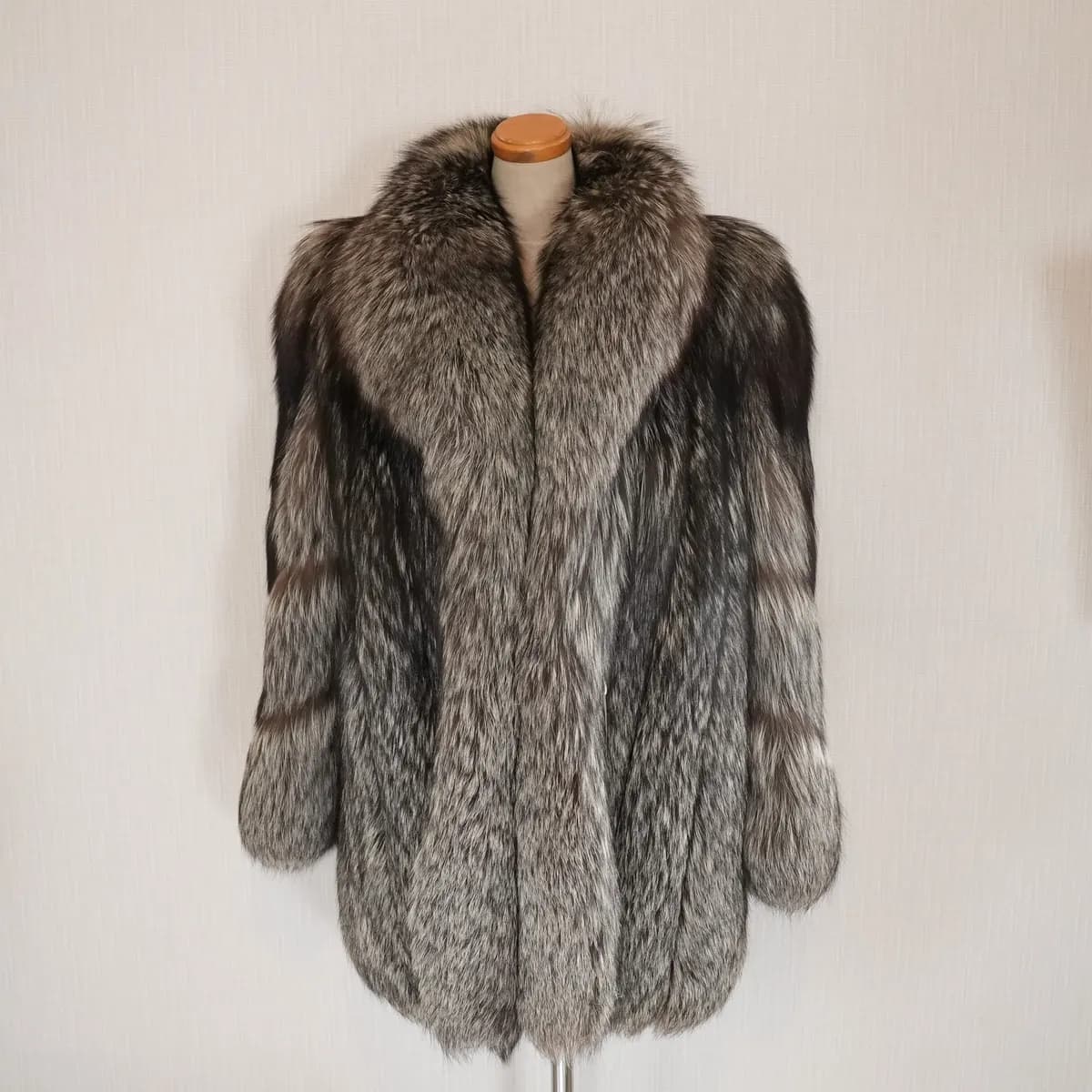
Silver fox is the classic dark fox: a black base with white-tipped guard hairs that read as silver. It is a melanistic (dark) form of the red fox, and it is the fox type we carry most.
Look: glossy black to blackish-brown, with silvering from the white tips; the underfur is blackish-brown and long. The amount of silvering varies a lot from coat to coat.
As a coat: the most dramatic of the fox types — it reads as eveningwear even in a short jacket or vest. Silver fox pelts have long been popular for capes, and in our stock it appears as long coats and vests.
- Pros: strong contrast and volume; the widest choice of shapes, because it is our most frequent fox type; the red-fox colour furriers historically valued most.
- Cons: the white-tipped guard hairs are what make it silver, so thinning at cuffs, collar and hem shows clearly — check those edges.
- Also called: black fox (older usage); some older sources even call it "blue fox", so check the colour, not only the name. Japanese: シルバーフォックス (shirubā fokkusu).
Blue fox
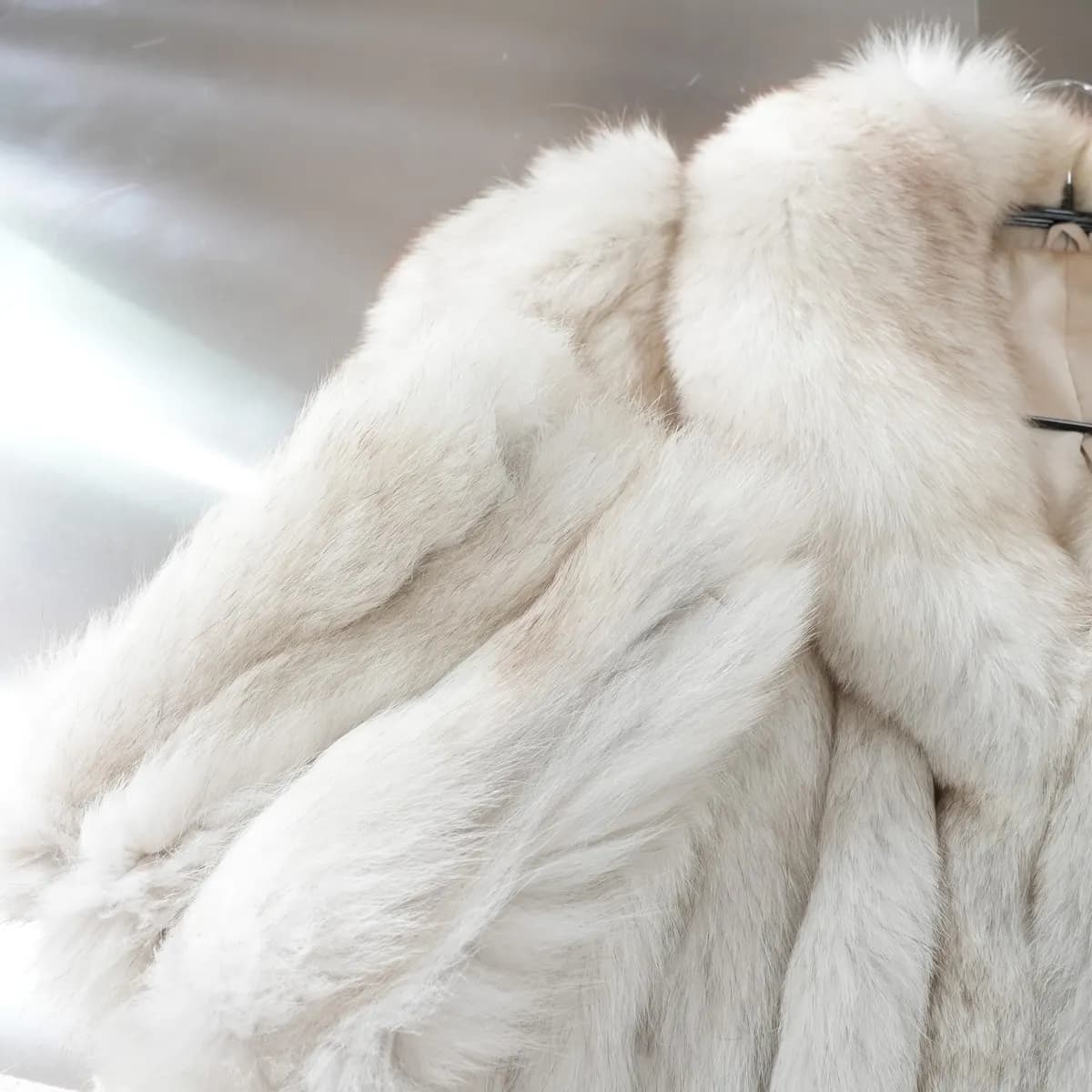
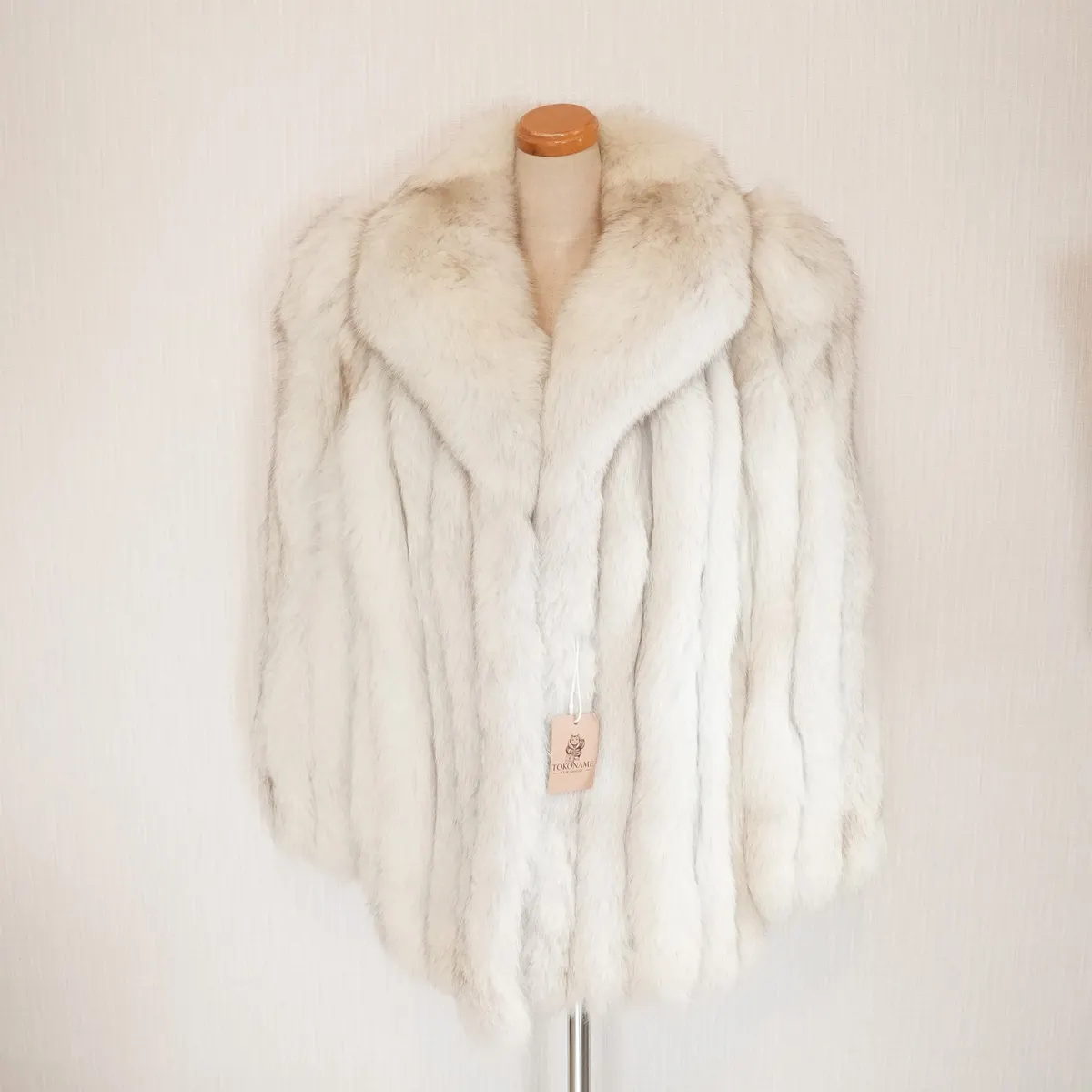
Blue fox is farmed arctic fox (Vulpes lagopus), not a red fox. Arctic fox is the most popular farmed fox in the fur trade, and blue fox is described as white with grey tips. It is our second most common fox type after silver fox.
Look: farmed blue fox has a near-white base tinged with grey low in the hair; Norway and Finland bred a very light-coloured blue fox type. The overall impression is soft grey-white.
As a coat: lighter-looking and softer in tone than silver fox, so it is easier to wear in daytime. Blue fox shows up often in 1970s and 1980s jackets and full-length coats, and also in trims, stoles and scarves.
- Pros: soft, pale and full; a lighter, less formal look than silver fox.
- Cons: a pale coat shows any discolouration — look closely at shoulders, cuffs and the collar in photos.
- Also called: arctic fox (the species); farmed blue fox. Japanese: ブルーフォックス (burū fokkusu).
Blue frost fox
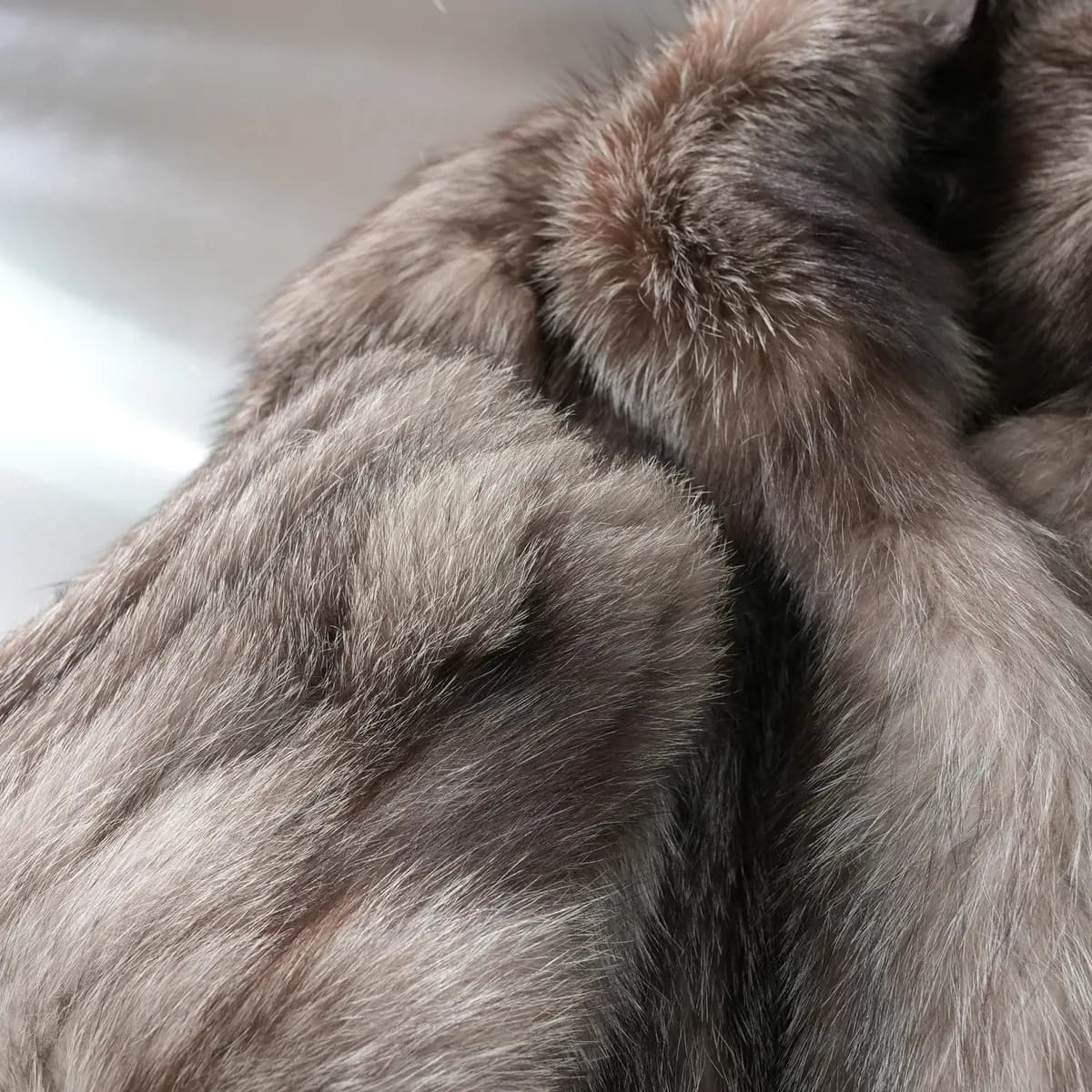
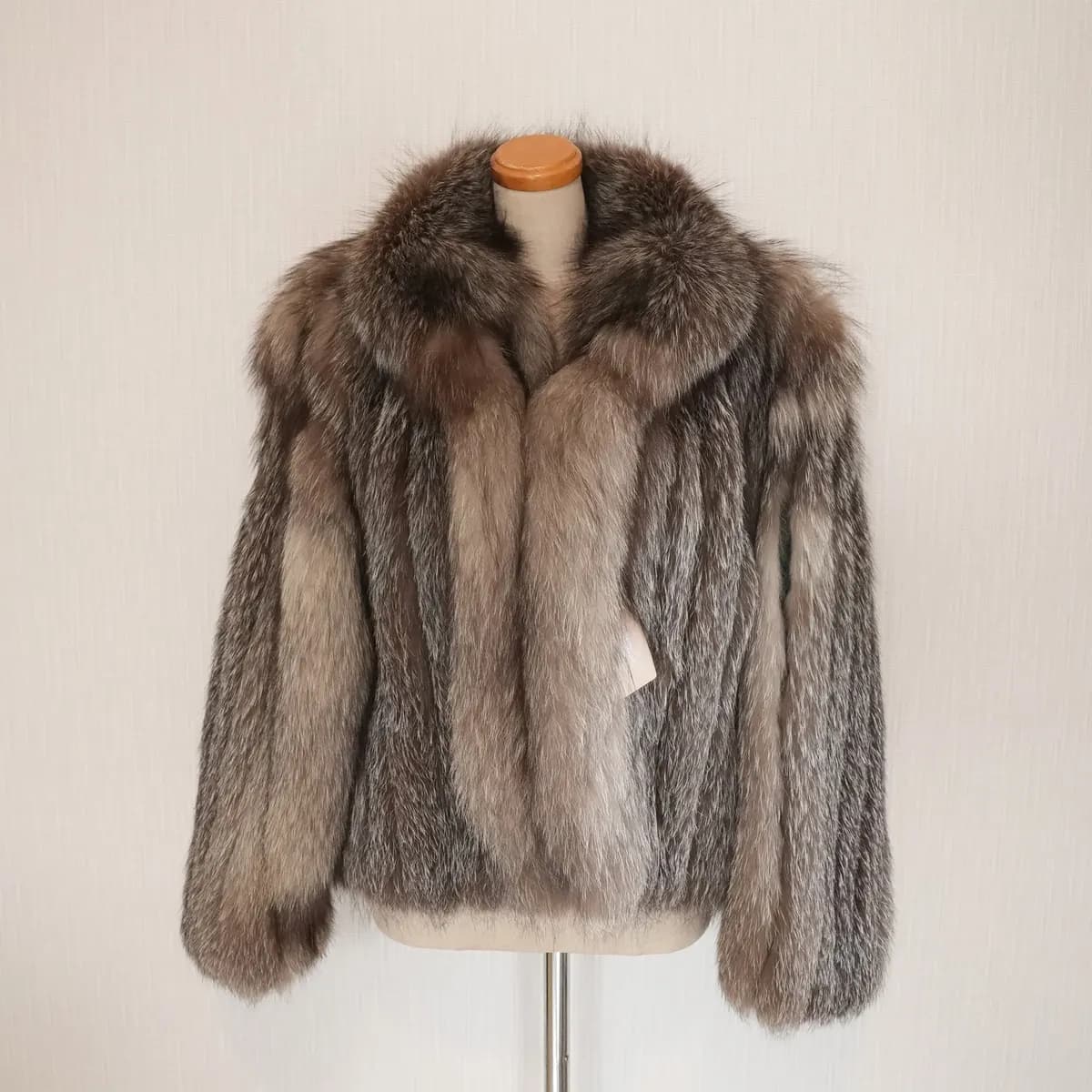
Blue frost fox is one of the named fox types Saga Furs sells, and Saga grades "Frost" skins as their own type alongside silver and Golden Island fox. In our stock it is uncommon — a handful of pieces so far.
Look: on the cropped jacket we carried, a smoky grey-brown fur with lighter tips, darker and more mixed in tone than blue fox.
As a coat: the muted colour makes it one of the more understated fox types — a good option if silver fox feels too dramatic and blue fox too pale.
- Pros: an unusual, muted colour; full fox volume without high contrast.
- Cons: comes up less often, so there is less choice of shapes and sizes.
- Also called: frost fox. Japanese: ブルーフロストフォックス (burū furosuto fokkusu).
Shadow fox
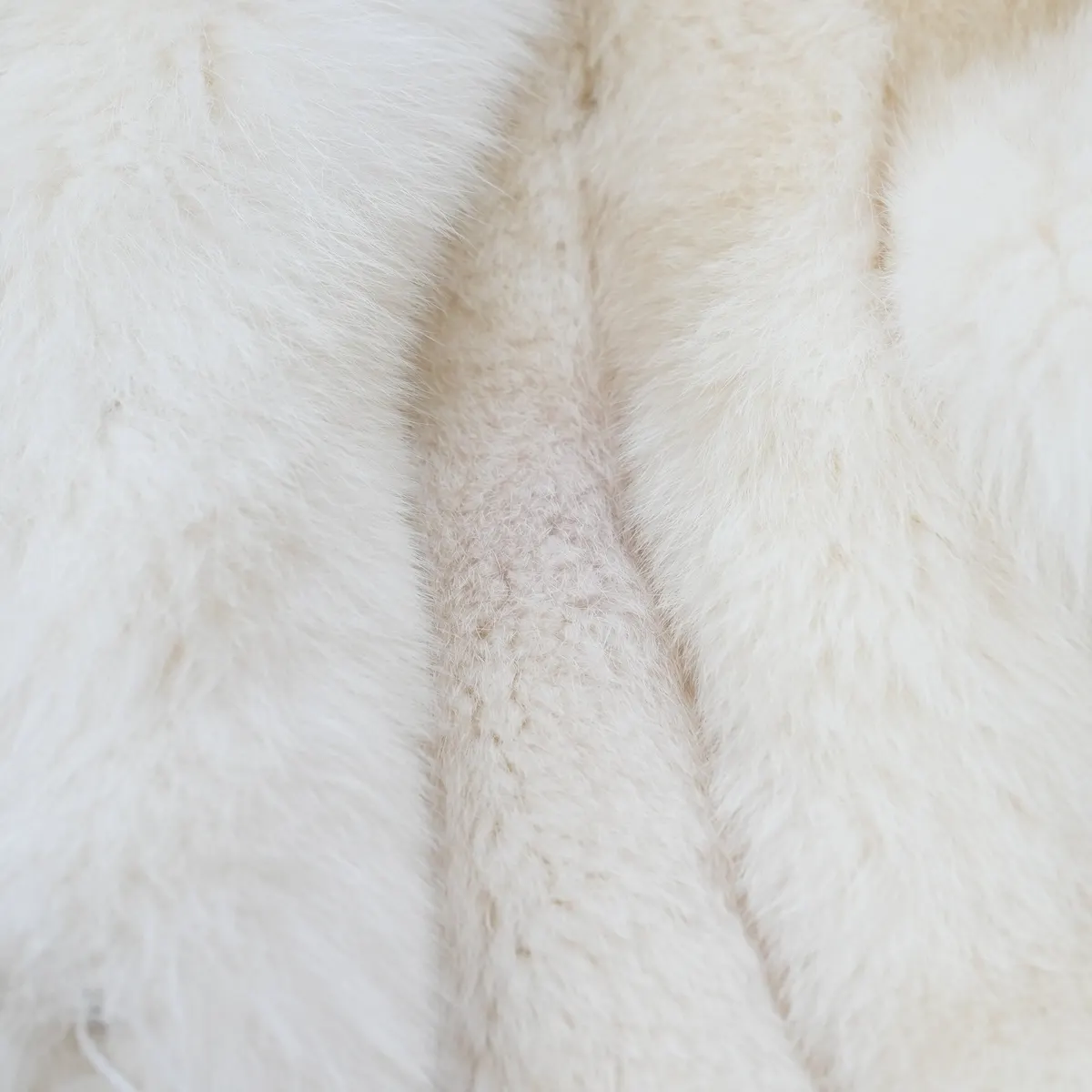
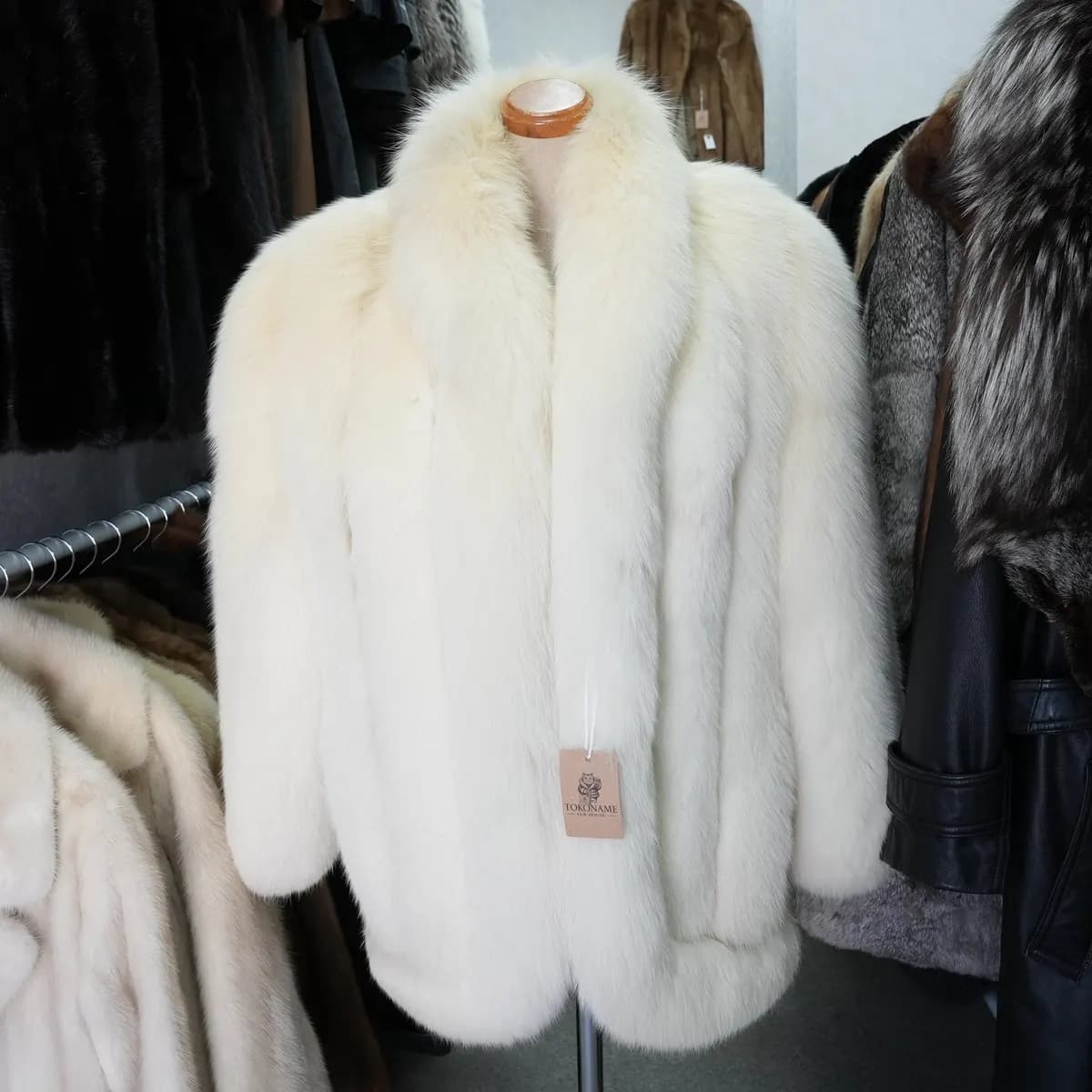
Shadow fox is an almost-white blue fox with a slightly darker stripe down the middle of each pelt. Saga Furs sells it as Blue Shadow Fox.
Look: mostly white, with a soft grey-beige "shadow" running through the centre of each skin.
As a coat: bright and light-looking; the darker centre lines give a subtle pattern down the coat.
- Pros: one of the brightest natural fox colours; the pattern adds interest without dye.
- Cons: on a near-white coat, check shoulders and cuffs closely for discolouration; uncommon in our stock.
- Also called: blue shadow fox, shadow blue fox. Japanese: シャドーフォックス (shadō fokkusu).
Red fox
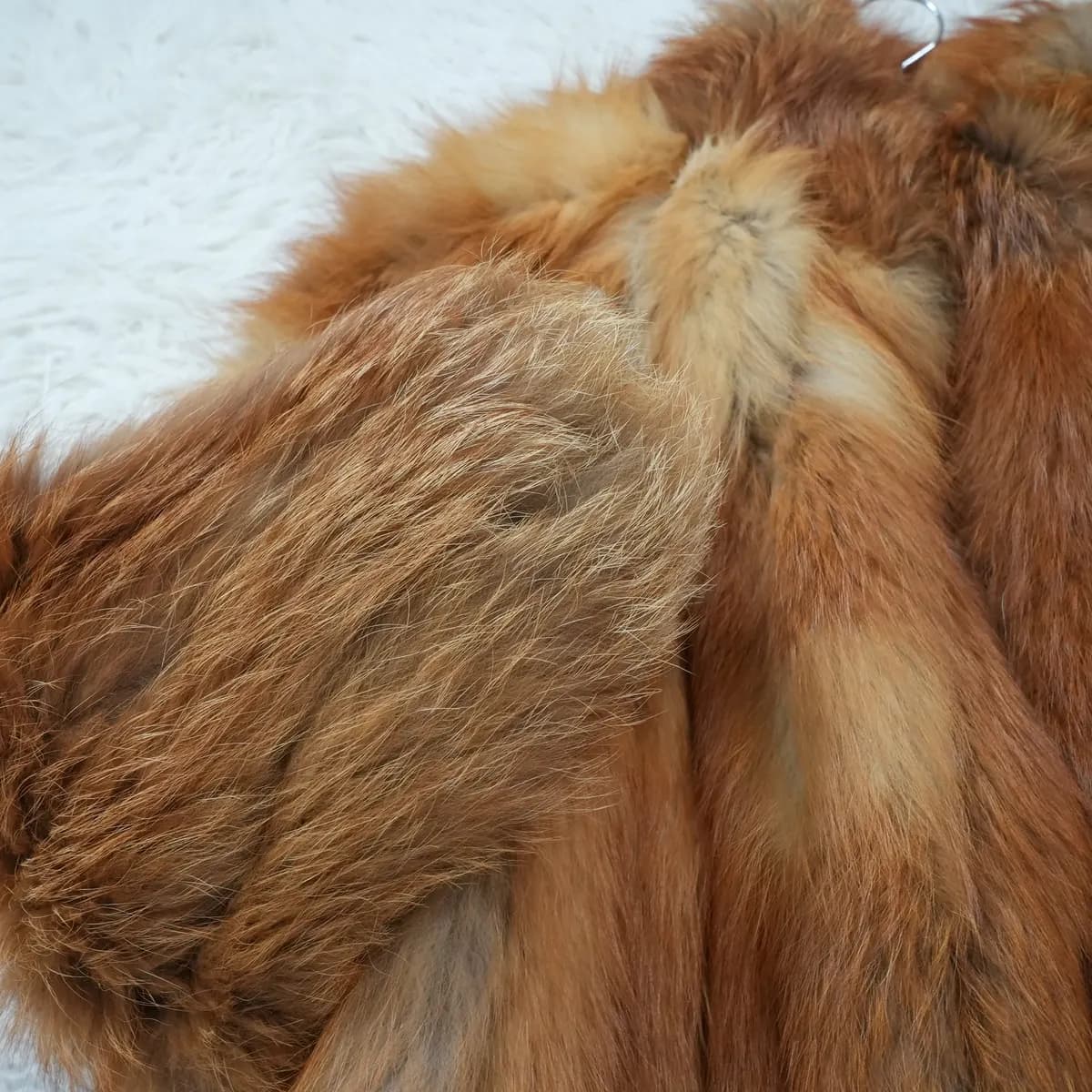
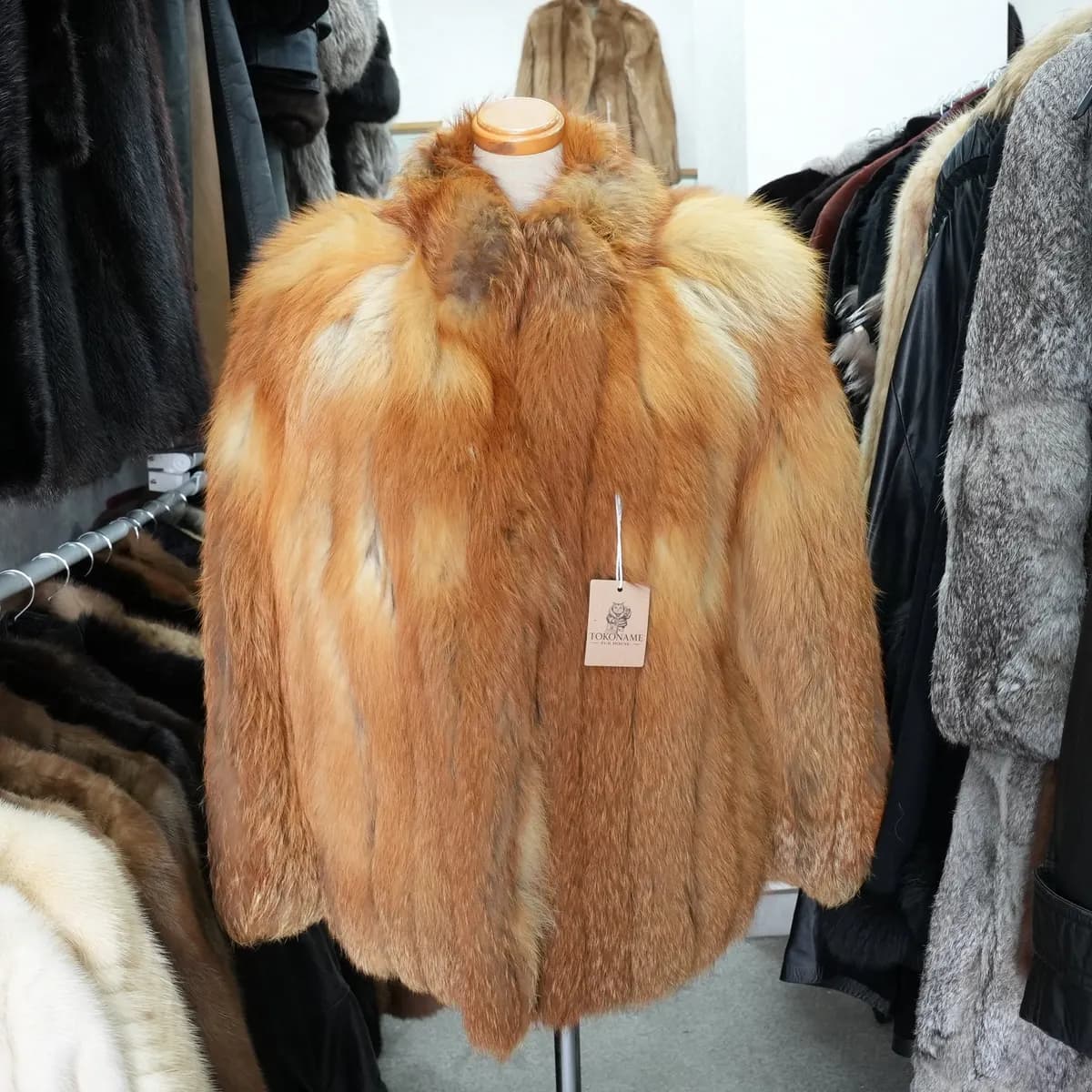
Red fox is the natural colour of Vulpes vulpes — the same species as silver and cross fox. It is warm orange to russet, and it is one of the most important fur-bearing animals in the fur trade.
Look: orange-red to rusty brown, with long guard hair.
As a coat: the warmest-looking fox colour, and the one that reads most casual. In vintage it is common in shawl collars and shorter capes, as well as coats like the one shown.
- Pros: a strong natural colour; more casual than silver fox.
- Cons: historically valued below silver and cross fox by furriers.
- Also called: Japanese: レッドフォックス (reddo fokkusu).
Golden Island fox
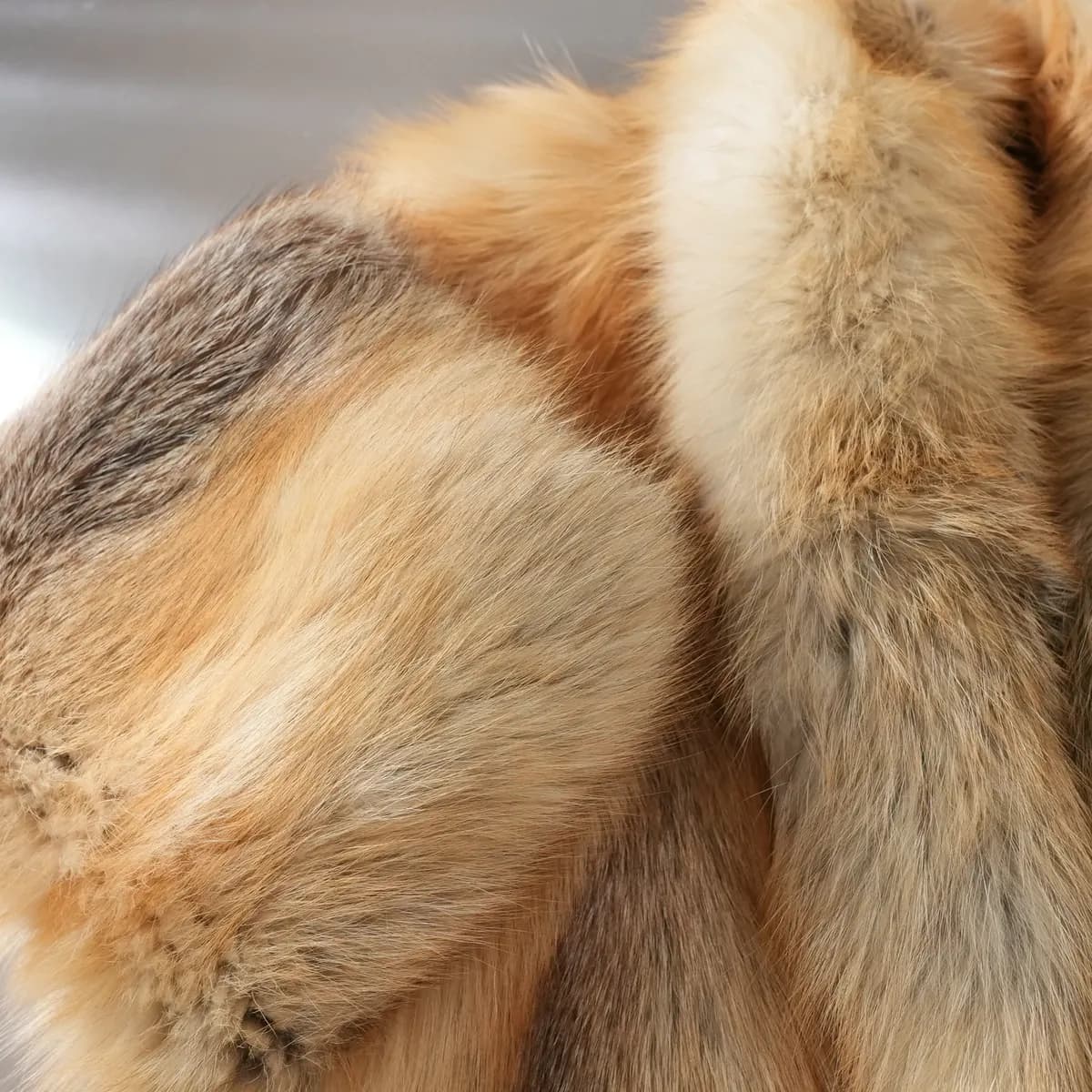
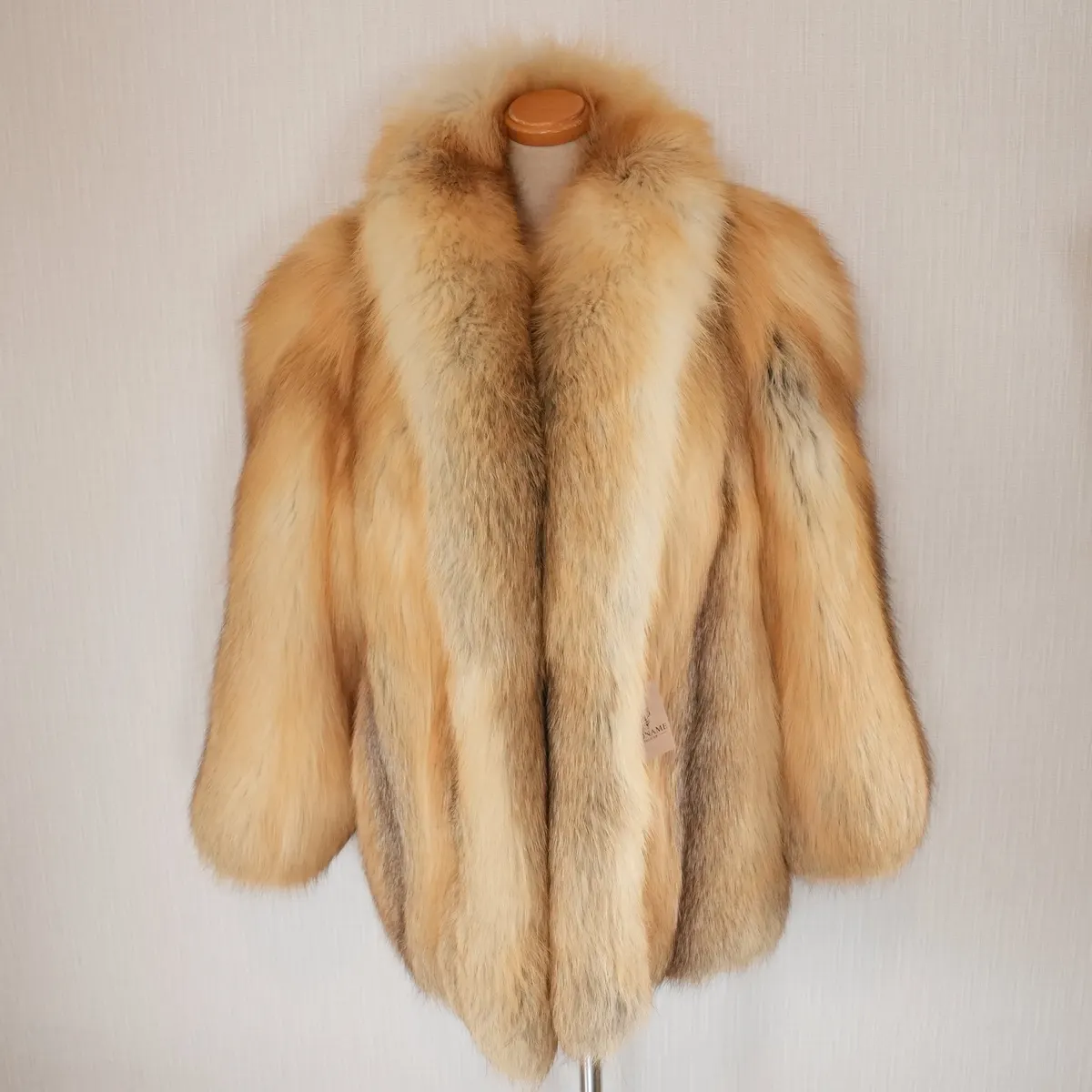
Golden Island fox is a farmed fox colour type that Saga Furs names among its mutation foxes and grades as its own type. We have carried only a few.
Look: on the coat pictured, a warm golden-apricot colour with cream and smoky grey-brown sections running through the pelts.
As a coat: warm and golden in tone, softer and lighter-looking than red fox. It suits buyers who want fox volume in a warm colour that is not as strong as red.
- Pros: a warm golden colour that few other furs offer; full fox volume.
- Cons: rarely comes up in vintage; the lighter cream areas show discolouration, so check shoulders and cuffs.
- Also called: Japanese: ゴールデンアイランドフォックス (gōruden airando fokkusu).
Platinum fox
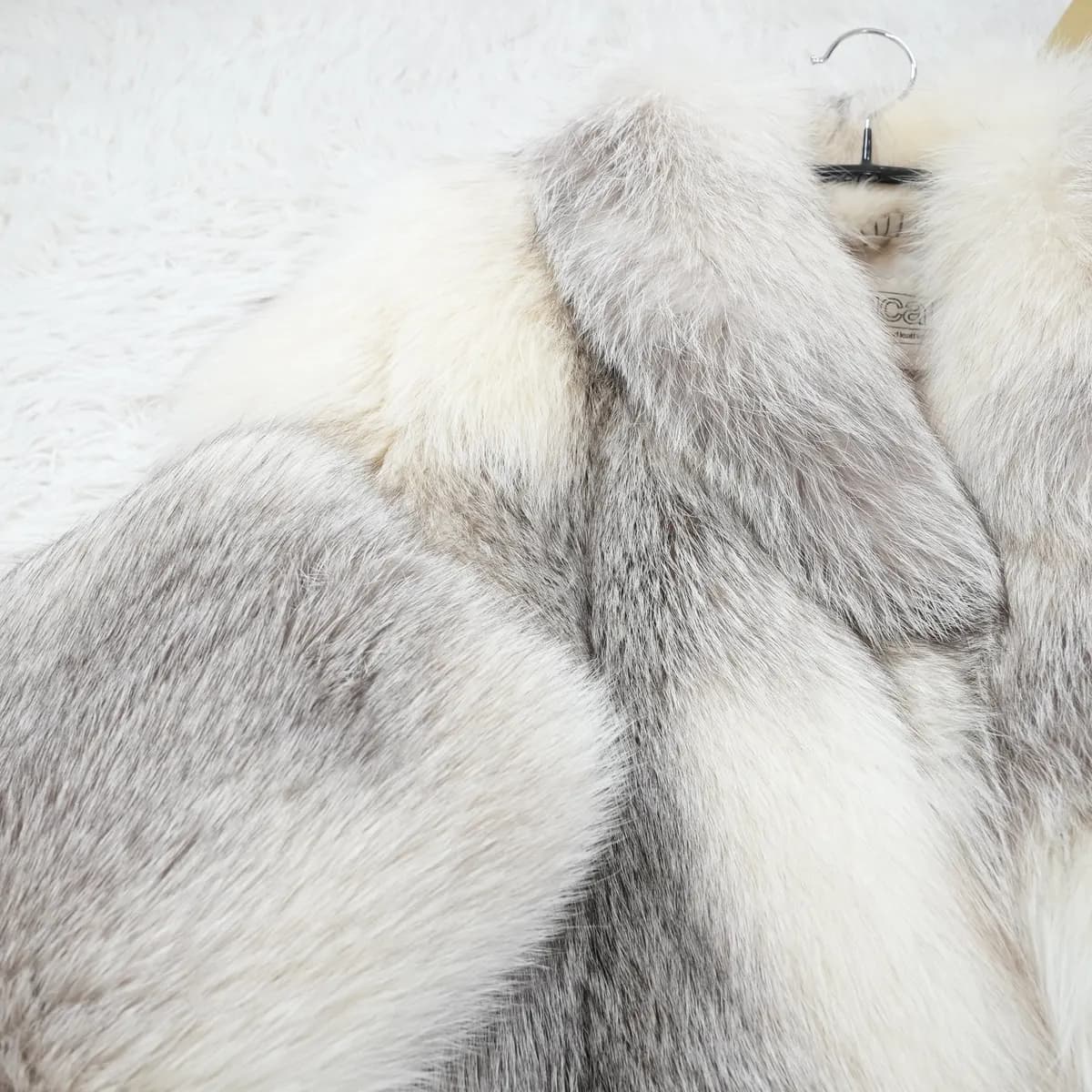
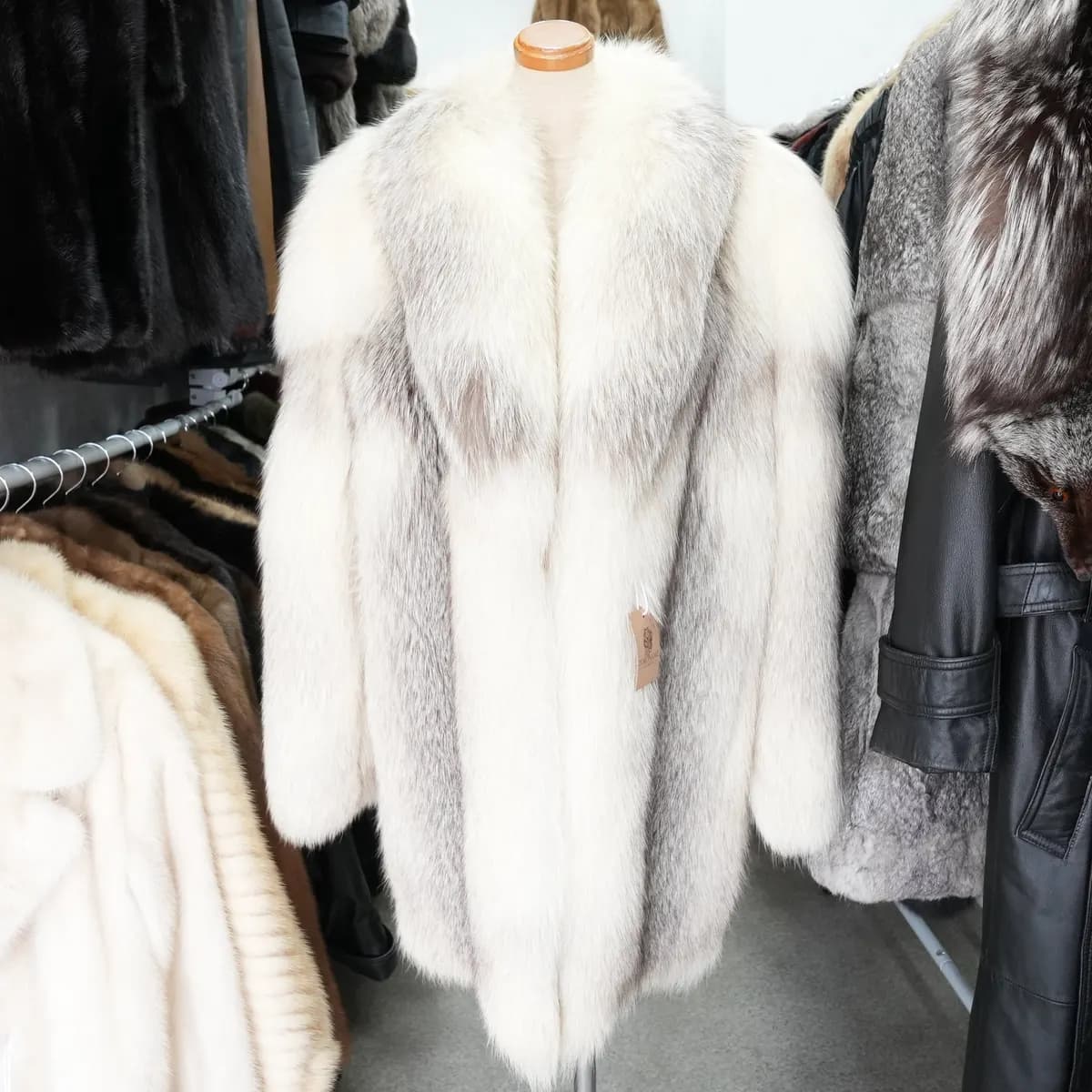
Platinum fox is a colour variation of the silver fox, known as the Norwegian platinum fox and bred in Norway in the 1930s. We have carried one platinum fox coat so far, with a SAGA Royal label.
Look: on our coat, white and pale silver-grey sections in large patches, much lighter than silver fox.
As a coat: pale and luminous; it has the volume of silver fox in a much lighter colour.
- Pros: an unusual pale colour within the silver fox family.
- Cons: rare — we have listed only one; pale fur needs careful checking for discolouration.
- Also called: platinum silver fox. Japanese: プラチナフォックス (purachina fokkusu).
Cross fox
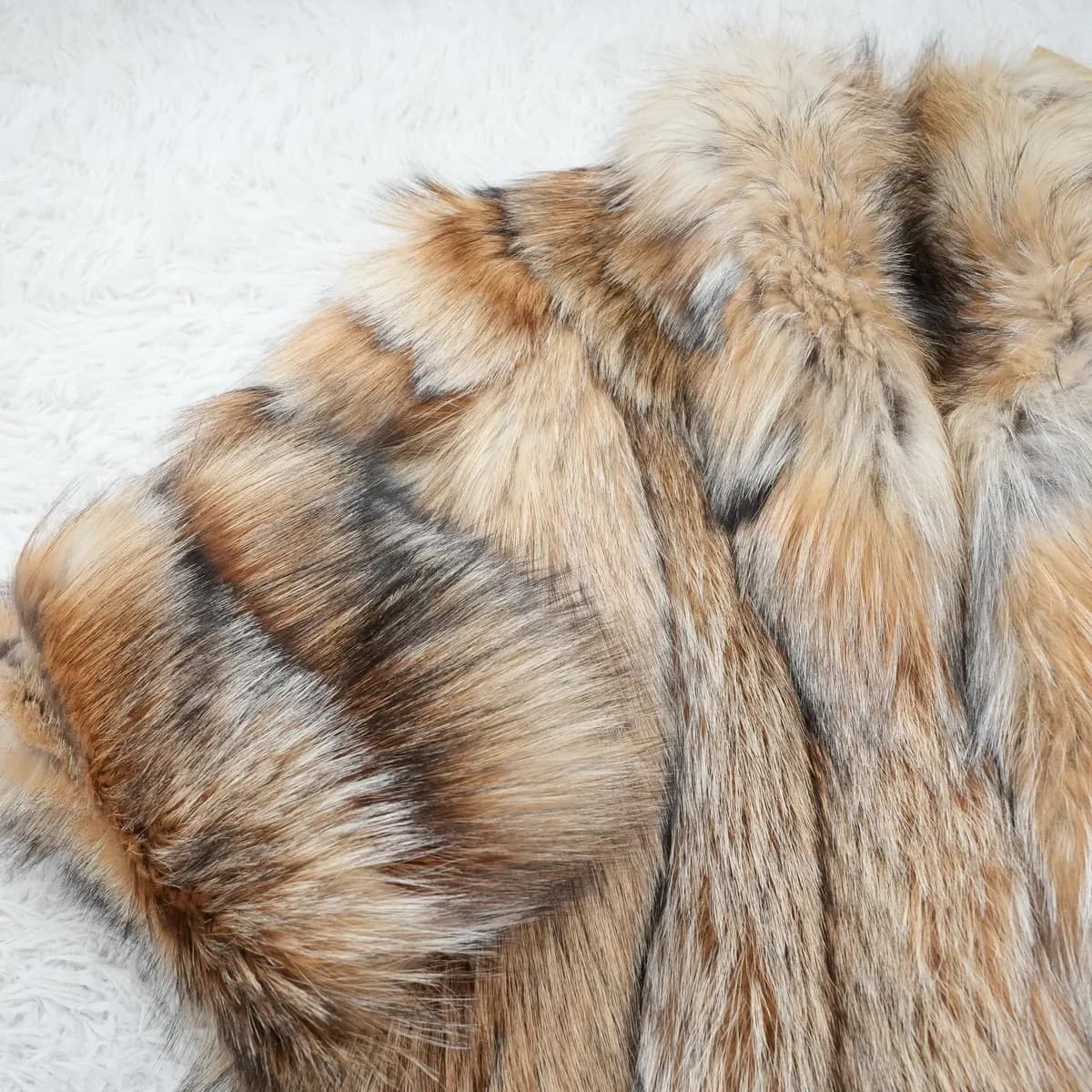
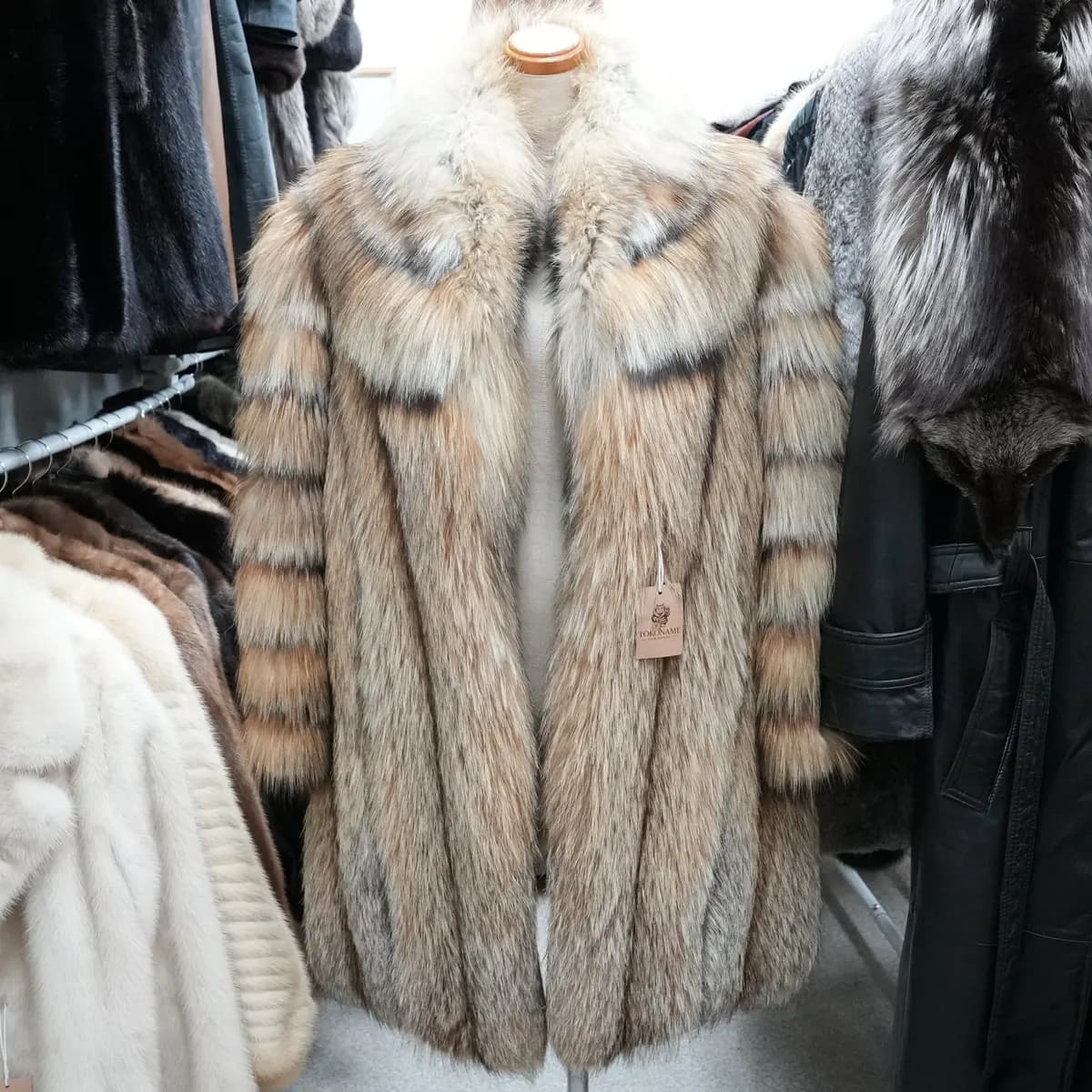
Cross fox is a partly dark colour variant of the red fox, named for the dark band down the back that crosses another over the shoulders. Saga Furs sells a Gold Cross Fox type; ours was labelled golden cross fox.
Look: reddish-yellow to brown fur, often heavily silvered, with darker markings over the neck and shoulders.
As a coat: a mix of red fox warmth and silver fox shading. Cross fox is rarely made into full coats — it is mostly used for trims — so a full cross fox coat is an unusual find.
- Pros: distinctive natural markings; historically valued above red fox.
- Cons: very rare in vintage coats — we have carried one.
- Also called: gold cross fox, golden cross fox. Japanese: クロスフォックス (kurosu fokkusu).
Dyed fox
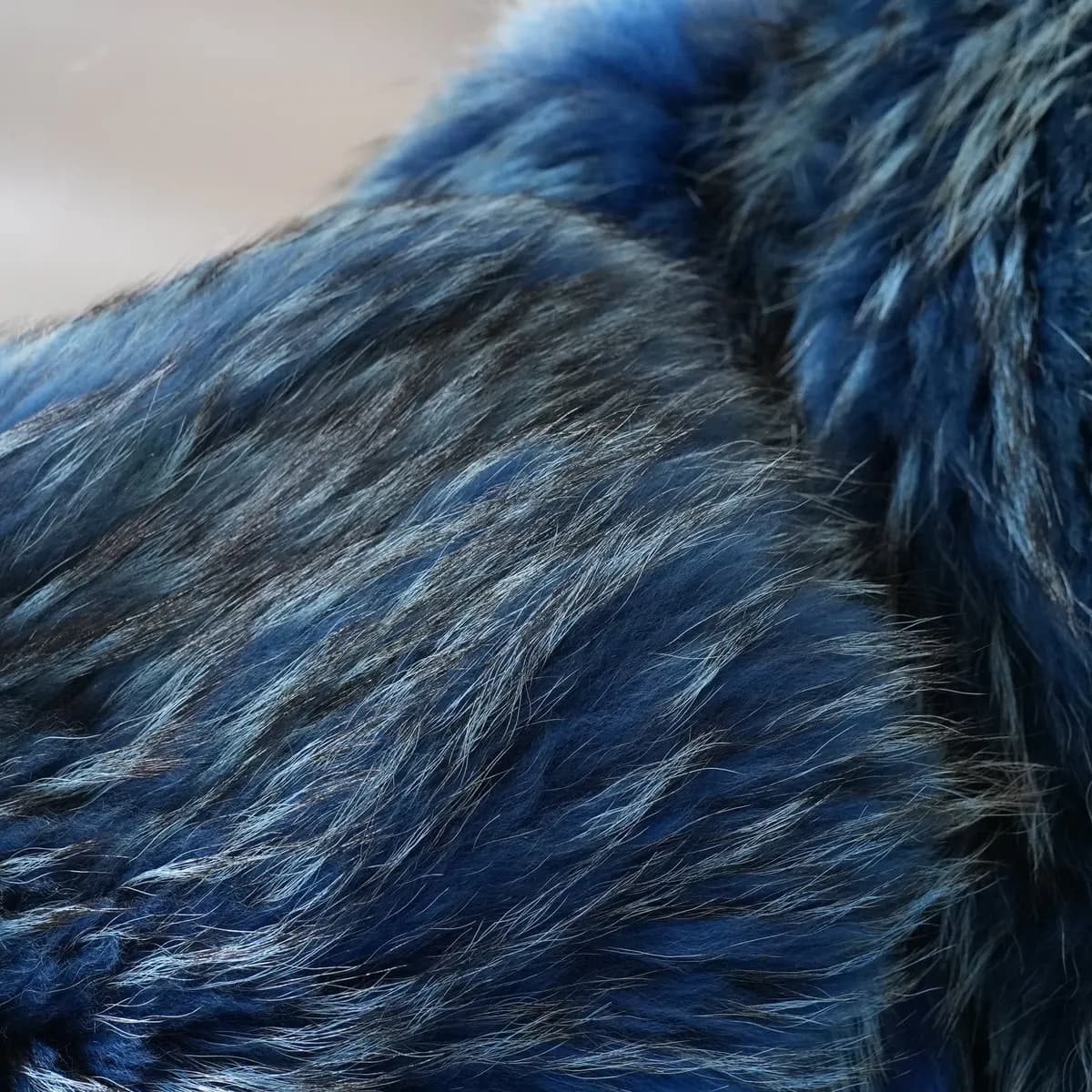
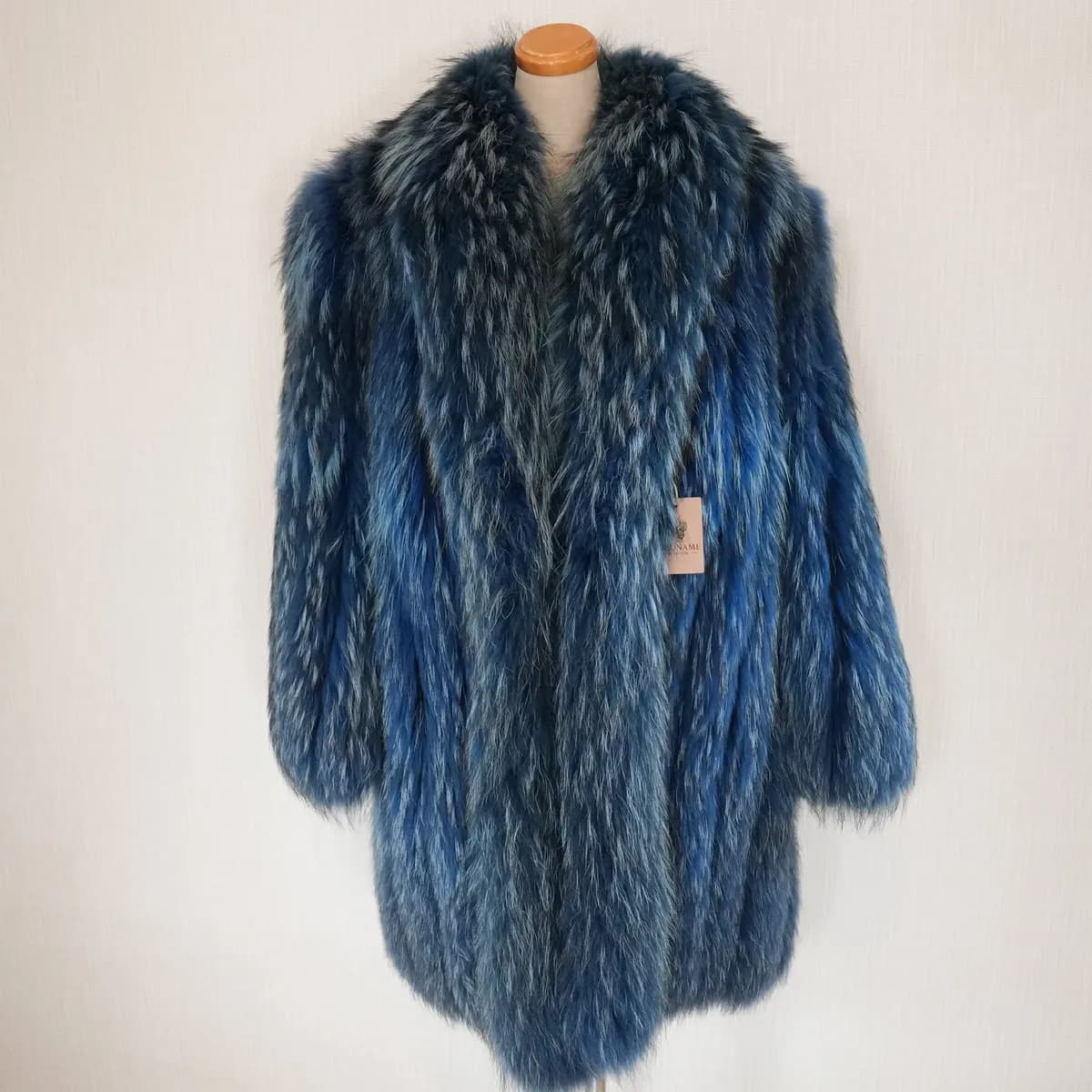
Dyed fox is fox fur that has been coloured with dye. In our experience, most dyed fox is blue fox; dyed silver fox also turns up occasionally.
Colour and price: the less common the colour, the higher the price. Vivid primary colours and pink, which circulate in small numbers, trade higher than more usual shades.
Silver fox vs blue fox
Silver fox and blue fox are different species: silver fox is a dark form of the red fox, blue fox is farmed arctic fox. Silver fox is dark and high-contrast; blue fox is pale grey-white and softer in tone. Both are full, warm fox furs and both are common in vintage Japanese stock.
| Silver fox | Blue fox | |
|---|---|---|
| Species | Red fox (Vulpes vulpes), dark form | Arctic fox (Vulpes lagopus), farmed |
| Colour | Black base, white-tipped guard hairs | White with grey tips; near-white base |
| Overall look | Dark, dramatic, high contrast | Pale, soft, low contrast |
| What to check | Thinning at cuffs, collar and hem | Discolouration at shoulders, cuffs and collar |
| In our stock | Our most common fox type | Our second most common fox type |
| Japanese name | シルバーフォックス | ブルーフォックス |
Silver vs cross vs red fox
Silver, cross and red fox are all the same species — the red fox — in three colour forms. Furriers historically valued silver most, then cross, then red. In vintage, silver fox is by far the easiest of the three to find.
| Silver fox | Cross fox | Red fox | |
|---|---|---|---|
| Colour | Black with white-tipped guard hairs | Reddish-yellow with a dark cross over the shoulders | Orange to russet |
| Historical value to furriers | Highest | Middle | Lowest of the three |
| Typical use | Coats, capes, stoles | Mostly trims; full coats are rare | Collars, capes, coats |
| How often we carry it | Most often | Rarely (one piece) | Sometimes |
How to choose a vintage fox coat
Start with the leather, then the fur at the points that rub. A vintage fox coat is only as good as the skin it is sewn from, and fox shows wear first at the underarms, collar, cuffs and hem. The general authentication and condition steps are in how to authenticate vintage fur; these are the fox-specific checks.
- Leather side: it must not be dry, and there must be no tears. If you can see inside the lining, the skin should look and feel supple.
- Underarms and collar: this is where tears appear most often on fox. Check the seams there first.
- Listen as you move it: if the coat crackles or rustles when you flex it, the leather has dried out — avoid it.
- Softness: feel how the coat drapes. As a rule, a softer tan is better.
- Guard hair at cuffs, hem and collar edge: look for thinning, broken tips or flattened patches.
- Buying from photos: look at the shoulders and cuffs for thin fur or discolouration — they show condition first. Sellers who photograph and describe flaws are easier to trust; comparing several items and conditions on the same site tells you whether a shop writes about condition honestly.
- Size: vintage tag sizes are unreliable — measure shoulders, bust and sleeve and compare with a coat that fits (see the vintage fur sizing guide).
Some inexpensive new fur coats are made by stretching the pelts thin. They feel light and soft, but tend to lack the density and durability of a well-made older coat. A vintage coat gives an existing garment a second life — worth weighing against buying new. See current fox pieces →
Frequently asked questions
What is the difference between silver fox and blue fox?
They are different species. Silver fox is a dark form of the red fox (Vulpes vulpes), with a black base and white-tipped guard hairs. Blue fox is farmed arctic fox (Vulpes lagopus), pale grey-white in tone. Silver fox looks darker and more dramatic; blue fox looks softer and lighter.
Is fox fur warm?
Yes. Fox has long guard hair over a dense underfur, and the underfur is what keeps you warm. The arctic fox, the species behind blue and shadow fox, is widely described as having the best insulation of any mammal.
How long does a fox fur coat last?
As a general rule of thumb, fox is more durable than rabbit but less durable than mink. How long a vintage coat lasts depends mostly on its leather: a supple skin with no tears and no crackling sound when flexed has plenty of life left; a dry, crackling skin does not. See how to authenticate vintage fur for condition checks.
What does SAGA mean on a fox fur label?
SAGA is the label of Saga Furs, the fur auction house founded in Finland in 1938. On older fox coats it marked fox pelts bred in the Scandinavian countries; SAGA Royal marks Saga's top regular quality grade, defined by dense underwool and resilient, even guard hair. It is a pelt label, not a designer brand.
Is "blue fox" always arctic fox?
In today's fur trade, blue fox means farmed arctic fox. But the word "blue" has also been used loosely in the trade for dark winter furs, and some older sources call silver fox "blue fox". If a listing says blue fox, check the photos: blue fox is pale grey-white, silver fox is black with white tips.
Which fox type is the rarest in vintage?
Among the fox types we have carried, platinum fox and cross fox are the rarest — one piece each so far — followed by Golden Island, shadow and blue frost fox. Silver fox and blue fox are by far the most common. See current fox pieces →
Related category
Fur